Firearms
.338 ARC ammo comes in both subsonic and supersonic factory loads, so the right choice depends on what matters most for your rifle. Subsonic options favor heavy bullets and reduced ballistic crack, while supersonic loads provide more velocity, flatter trajectories and stronger downrange energy.
2026 .338 ARC Ammo Guide At A Glance
TL;DR
.338 ARC ammo gives shooters two clearly different performance paths. In short, heavy subsonic loads make the most sense when suppressed sound performance matters, whereas faster supersonic ammunition makes better use of the cartridge at longer distances.
- Subsonic hunting pick — 307 gr Sub-X: Hornady lists this expanding load as the heavy subsonic hunting-oriented option in the current family.
- Range-friendly subsonic pick — 285 gr FMJ Frontier: This 2026 addition uses a heavy full-metal-jacket projectile aimed at routine subsonic shooting.
- Supersonic hunting pick — 170 gr MonoFlex: The lighter monolithic projectile offers much more velocity while retaining an expanding bullet design.
- Precision-oriented supersonic pick — 175 gr HP Match: This factory load closely matches the weight used in SAAMI's published velocity reference.
- Main tradeoff: Subsonic ammunition avoids the bullet's supersonic crack. By comparison, supersonic ammunition carries more speed and energy downrange.
The choice between subsonic and supersonic ammunition changes far more than sound. For example, bullet weight, muzzle velocity, trajectory and retained energy all move in different directions. Therefore, comparing the loads by their intended role is more useful than simply choosing the heaviest or fastest box.
Gunvexa built this guide around published factory information rather than handload data or unverified pressure claims. In addition, we compare the current Hornady lineup, explain what the two speed categories mean and show how the cartridge compares with .300 Blackout and 8.6 Blackout.
Gunvexa Editorial Methodology
Gunvexa reviewed Hornady product announcements, published ammunition specifications and SAAMI's accepted 338 Advanced Rifle Cartridge data. However, factory velocity can vary with barrel length, temperature, firearm setup and ammunition lot. For that reason, the numbers in this guide should be treated as published reference figures rather than guaranteed results from every rifle.
Understanding .338 ARC Ammo — Hornady's Suppressed-Shooting Design
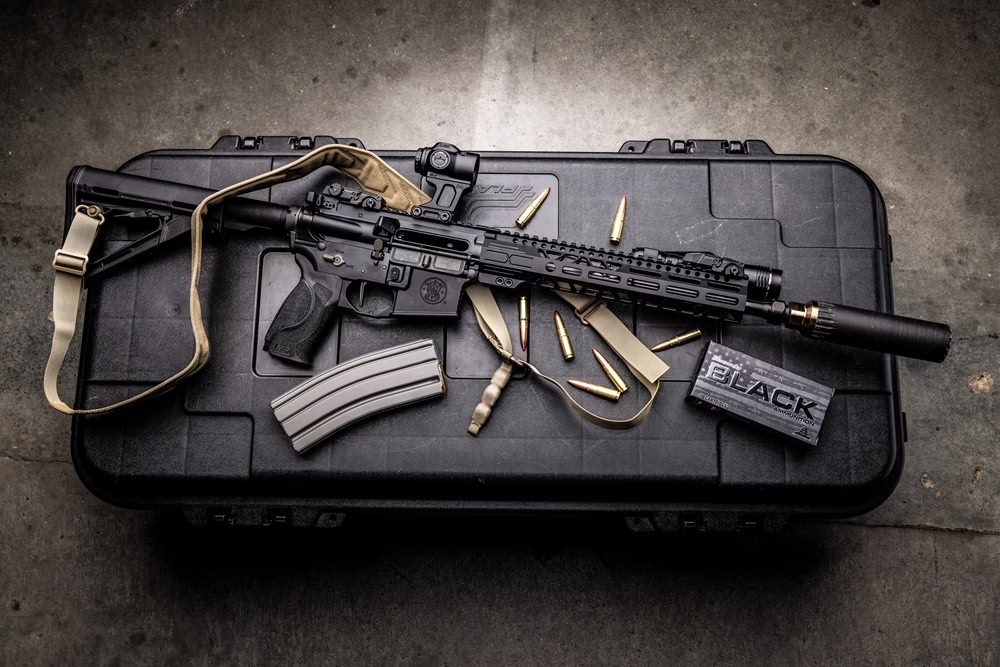
Hornady introduced 338 ARC as a new product for the 2025 model year. From the beginning, the company positioned the cartridge around hard-hitting subsonic performance while keeping the platform compact enough for AR-15-size and micro-bolt-action firearms.
The original factory pair made that concept easy to understand. The 307-grain Sub-X handled the heavy subsonic side, whereas the 175-grain HP Match represented the faster supersonic side. Then, for 2026, Hornady expanded the range with 170-grain MonoFlex, 215-grain FTX and 285-grain FMJ Frontier offerings.
What The SAAMI Standard Tells Us
SAAMI accepted the 338 Advanced Rifle Cartridge in January 2025. Its public introduction lists a maximum average pressure of 52,000 psi together with an instrumental reference velocity of 2,050 fps using a 175-grain projectile. Consequently, the cartridge is not merely a low-speed subsonic concept; its standard also supports full supersonic operation.
| Specification | Published Reference | Why It Matters |
|---|---|---|
| Cartridge | 338 Advanced Rifle Cartridge | Standardized commercial chamber and ammunition specification |
| Maximum Average Pressure | 52,000 psi | Defines the published SAAMI pressure ceiling for the cartridge standard |
| SAAMI Reference Velocity | 175 gr at 2,050 fps | Provides a useful reference point for supersonic factory performance |
| Bullet Diameter | .338-inch class | Allows the use of comparatively heavy bullets at subsonic speeds |
Why Suppressed Shooting Changes The Equation
A suppressor can reduce muzzle blast, but it cannot remove the ballistic crack produced by a projectile traveling faster than the speed of sound. As a result, heavy subsonic ammunition produces a noticeably different sound signature because the bullet itself does not create that supersonic crack.
Even so, suppressed shooting is not silent. The firearm's action, bullet impact and remaining muzzle report still produce noise. Therefore, suitable hearing protection remains the sensible choice whenever conditions allow.
What Makes The Cartridge Different?
One reason the cartridge stands out is that the same overall family covers two very different jobs. On one hand, shooters can use very heavy bullets near subsonic speed. On the other hand, lighter loads can move at more than 2,000 fps. That range gives buyers more flexibility than a cartridge designed around only one performance window.
Quick Answer
Why Did Hornady Build .338 ARC Around Both Speeds?
The two load types solve different problems. Heavy subsonic ammunition favors suppressed sound performance and high projectile mass, while lighter supersonic ammunition provides a flatter trajectory and more reach. Ultimately, the appeal comes from having both choices within one cartridge family.

Subsonic vs. Supersonic .338 ARC Ammo: What Changes?
The most obvious difference is speed. Subsonic loads remain below the speed of sound under their intended conditions, whereas supersonic loads exceed it. However, that change in velocity also affects bullet weight, muzzle energy, trajectory and practical use.
.338 ARC Subsonic Ammo
Current heavy factory options include Hornady's 307-grain Sub-X and the newer 285-grain FMJ Frontier. The Sub-X is the more specialized hunting-oriented bullet because Hornady designed that projectile family to expand at lower impact velocities. Meanwhile, the 285-grain FMJ offers a simpler heavy projectile for routine range use.
Published examples place these heavy loads around 1,050 fps. Despite the lower velocity, their projectile mass still produces substantial muzzle energy for a subsonic cartridge. Consequently, this is one of the areas where .338 ARC ammo separates itself from lighter .30-caliber subsonic choices.
.338 ARC Supersonic Ammo
On the faster side, Hornady offers lighter projectiles such as the 175-grain HP Match and 170-grain MonoFlex. These options give up the quietest possible bullet flight in exchange for a major increase in speed, flatter external ballistics and stronger energy retention.
In addition, the family includes a 215-grain FTX load. That gives buyers another middle-weight choice between the heaviest subsonic ammunition and the lightest supersonic offerings. Nevertheless, buyers should confirm current specifications on the ammunition box or manufacturer page because published factory data can change.
Published Factory Load Comparison
| Load | Type | Published / Reference Velocity | Approx. Muzzle Energy | Best Fit |
|---|---|---|---|---|
| 307 gr Sub-X | Subsonic | About 1,050 fps | About 752 ft-lb | Heavy expanding subsonic use where appropriate and lawful |
| 285 gr FMJ Frontier | Subsonic | About 1,050 fps | About 698 ft-lb | Range use, practice and routine subsonic shooting |
| 175 gr HP Match | Supersonic | About 2,050–2,075 fps | About 1,670 ft-lb | Precision-oriented target use and general supersonic shooting |
| 170 gr MonoFlex | Supersonic | About 2,075 fps | About 1,625 ft-lb | Hunting-oriented use where appropriate and lawful |
Which .338 ARC Ammo Type Should You Choose?
Choose Subsonic If...
Your priority is reduced ballistic crack with a suppressor, a heavy projectile and shorter-range use. In addition, select the exact bullet construction around your intended purpose instead of choosing only by grain weight.
Choose Supersonic If...
You care more about velocity, a flatter trajectory and stronger downrange energy. A suppressor can still reduce muzzle blast; however, the projectile will continue to produce a sonic crack.
Matching .338 ARC Ammo Loads To Real-World Uses
No single factory load makes every other option unnecessary. Instead, bullet construction matters alongside velocity. A heavy FMJ, an expanding Sub-X, a MonoFlex and a hollow-point match projectile can all carry the same cartridge name while serving noticeably different roles.
For Suppressed Range Use
The 285-grain FMJ Frontier is the straightforward choice when the goal is subsonic practice rather than expansion. Because of its simpler bullet construction, it makes more sense for routine range sessions. At the same time, the heavy projectile keeps it within the performance window many suppressed-rifle owners want.
For Hunting Where Legal
Hornady gives hunters two very different directions. The 307-grain Sub-X focuses on expansion at subsonic velocity, whereas the 170-grain MonoFlex uses a lighter monolithic projectile at supersonic speed. In simple terms, one favors heavy low-speed performance while the other favors velocity and trajectory.
However, technical capability is only one part of the decision. Local hunting rules may restrict caliber, ammunition type or suppressor use. Therefore, always confirm the rules that apply to the species, season and location before heading into the field.
For Precision-Oriented Target Shooting
The 175-grain HP Match is the natural factory starting point when accuracy and supersonic external ballistics matter more than reduced bullet-flight noise. Furthermore, its bullet weight closely matches SAAMI's published 175-grain velocity reference, which makes it a useful baseline for understanding the cartridge at full speed.
Quick Use-Case Comparison
| Use | Suggested Factory Load | Why |
|---|---|---|
| Subsonic Practice | 285 gr FMJ Frontier | Heavy FMJ design aimed at routine subsonic range use |
| Subsonic Hunting | 307 gr Sub-X | Expanding projectile developed around low-velocity performance |
| Supersonic Hunting | 170 gr MonoFlex | Lighter monolithic expanding bullet with much higher velocity |
| Precision / Target | 175 gr HP Match | Supersonic hollow-point match-style load and useful reference option |
.338 ARC Ammo vs. .300 Blackout And 8.6 Blackout
Comparing these cartridges only by bullet diameter misses the bigger picture. .300 Blackout has the deepest market support and fits the familiar AR-15 ecosystem. By contrast, 8.6 Blackout moves into the larger .308/AR-10-size platform class. .338 ARC sits between those ideas by pairing a .338-caliber projectile with a smaller host-platform concept.
How The Three Cartridges Differ
Platform size is the first major difference. .300 Blackout and .338 ARC fit the smaller rifle category, whereas 8.6 Blackout generally belongs in a larger .308-size system. In addition, market maturity differs significantly because .300 Blackout has been established for much longer.

.338 ARC vs. .300 Blackout
.300 Blackout remains easier to find across a broad range of rifles and ammunition brands. It also has a long history with both subsonic and supersonic factory ammunition. Meanwhile, .338 ARC uses a larger-diameter and generally heavier projectile in its subsonic configuration.
According to Hornady, its subsonic 338 ARC concept can deliver roughly one-and-a-half times the energy of .300 Blackout Subsonic. Even so, that does not make the newer cartridge automatically better. .300 Blackout still has the advantage in maturity, firearm selection and broad ammunition availability.
Where .338 ARC Has The Advantage
The newer cartridge becomes more interesting when a buyer specifically wants heavier .338-caliber subsonic projectiles without moving to a larger .308-size rifle. Therefore, its strongest selling point is not that it replaces .300 Blackout everywhere, but that it offers a different balance of projectile diameter, platform size and factory load choices.

.338 ARC vs. 8.6 Blackout
8.6 Blackout operates in a larger rifle platform class and can use very heavy .338-caliber projectiles. As a result, its overall performance ceiling and host-rifle requirements differ from the more compact 338 ARC concept.
For shooters already committed to a .308-size platform, 8.6 Blackout may make more sense. Conversely, someone who wants a .338-caliber cartridge in an AR-15-size or micro-bolt-action format may find the smaller cartridge more appealing.
Compact Cartridge Comparison
| Cartridge | General Platform Class | Subsonic Factory Loads | Supersonic Factory Loads | Main Strength |
|---|---|---|---|---|
| .338 ARC | AR-15-size / micro bolt action | Yes | Yes | Heavy .338-caliber concept in a compact platform class |
| .300 Blackout | AR-15-size / compact bolt action | Yes | Yes | Mature ecosystem and broad ammunition availability |
| 8.6 Blackout | .308 / AR-10-size class | Yes | Yes | Very heavy .338-caliber bullets in a larger platform |

Conclusion: Which .338 ARC Ammo Makes Sense In 2026?
The right choice depends on what you want the ammunition to do. If reducing ballistic crack in a suppressed setup matters most, a heavy subsonic load is the obvious place to begin. However, when distance, trajectory and retained energy matter more, a supersonic load becomes the stronger fit.
Gunvexa's Load Selection Summary
Within those two categories, bullet construction decides the rest. For routine subsonic practice, the 285-grain FMJ makes sense. Meanwhile, the 307-grain Sub-X provides an expanding heavy option, the 175-grain HP Match covers precision-oriented supersonic use and the 170-grain MonoFlex adds a faster expanding alternative.
More importantly, the expanded 2026 lineup makes .338 ARC ammo more useful than it was when the cartridge first appeared. Instead of being viewed only as a heavy subsonic concept, it now has enough factory variety to cover several distinct shooting roles.
Subsonic Or Supersonic: The Simple Decision
In practical terms, subsonic ammunition is the better fit when reduced bullet-flight noise and projectile mass matter most. Supersonic ammunition makes more sense when you want more velocity and a flatter flight path. Therefore, buyers who plan to use both should treat them as two different performance tools rather than interchangeable boxes.
Gunvexa Verdict
Which Type Should You Buy?
Choose subsonic ammunition when heavy projectiles and reduced sonic crack are your priorities. Choose supersonic ammunition when you need more velocity, a flatter trajectory and stronger downrange energy. In either case, use factory-loaded ammunition that matches the firearm manufacturer's recommendations.
Safety, Hearing & Legal Note
Suppressors do not make firearms silent. Therefore, use appropriate hearing protection, follow the firearm and ammunition manufacturers' instructions, and confirm current federal, state and local rules before purchasing or using a suppressor or hunting with one. This article covers factory ammunition only and does not provide handloading data.
Manufacturer Sources & Further Reading
Hornady — 2025 New Product Announcement / 338 ARC Introduction
Hornady — 2026 Ammunition Line Extensions
Hornady — 338 ARC 2026 Product Line Summary
SAAMI — 338 Advanced Rifle Cartridge Public Introduction
Browse more .338 ARC articles on Gunvexa or visit the Gunvexa shop .
.338 ARC Ammo FAQs
What Is .338 ARC Ammo?
.338 ARC ammo is factory ammunition made for Hornady's 338 Advanced Rifle Cartridge. The cartridge supports both heavy subsonic loads and lighter supersonic loads, and SAAMI standardized it in 2025.
Is .338 ARC Designed For Suppressors?
Hornady introduced 338 ARC with a strong focus on heavy subsonic performance. However, the cartridge also supports supersonic factory ammunition. A suppressor can reduce muzzle blast, but a supersonic projectile still creates a ballistic crack.
What Is The Difference Between .338 ARC Subsonic And Supersonic Ammo?
Subsonic loads use heavier projectiles at lower velocity to avoid the bullet's sonic crack. By comparison, supersonic loads use lighter projectiles at much higher velocity, which produces a flatter trajectory and more downrange energy.
Which .338 ARC Load Is Best For Range Use?
For subsonic practice, the 285-grain FMJ Frontier is the most straightforward factory option. Meanwhile, shooters wanting faster precision-oriented target performance may prefer the 175-grain HP Match.
How Does .338 ARC Compare With .300 Blackout?
.300 Blackout has a larger established firearm and ammunition ecosystem. In contrast, .338 ARC uses a larger .338-caliber projectile, and Hornady says its subsonic configuration delivers roughly 1.5 times the energy of .300 Blackout Subsonic.
How Does .338 ARC Compare With 8.6 Blackout?
.338 ARC targets the smaller AR-15-size and micro-bolt-action platform class, whereas 8.6 Blackout generally uses a larger .308 or AR-10-size platform. Therefore, they serve different rifle-size and performance requirements despite both using .338-caliber projectiles.
What Is The SAAMI Maximum Average Pressure For 338 ARC?
SAAMI's public 338 ARC introduction lists a maximum average pressure of 52,000 psi. In addition, it lists a 175-grain instrumental reference velocity of 2,050 fps.