
Optics
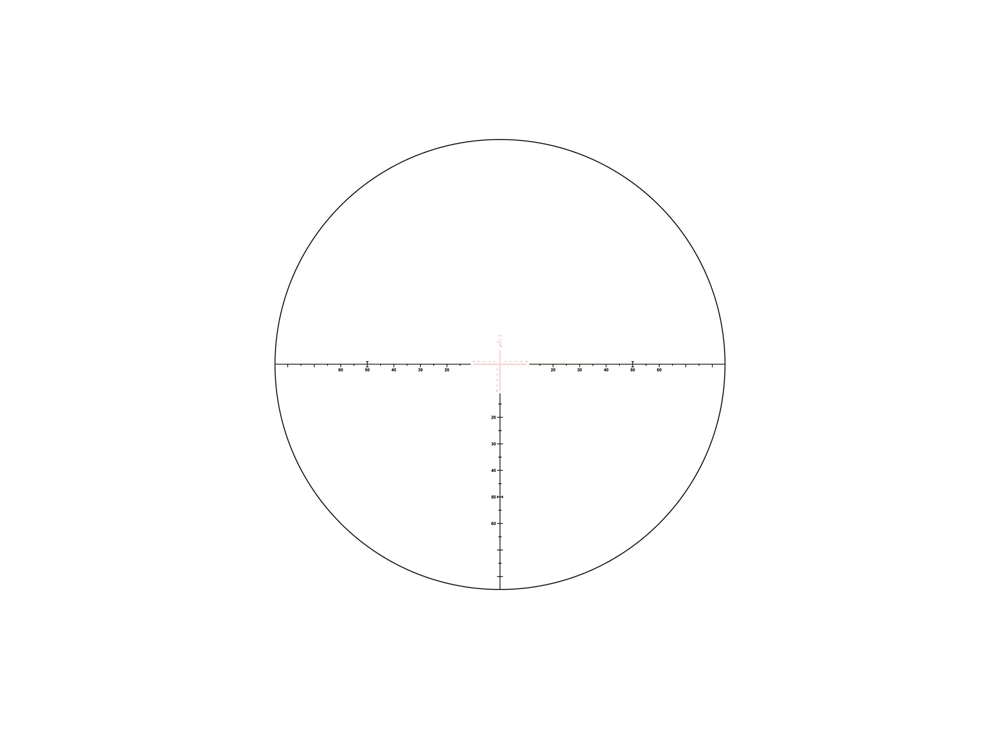
ACSS reticles are designed to help shooters make faster and more informed aiming decisions. Instead of offering only a simple crosshair, many ACSS-style reticles combine ranging, holdovers, wind holds, and quick target references.
This Gunvexa guide explains ACSS reticles in simple terms. It covers long-range shooting benefits, precision rifle use, practical reticle features, optic selection, and how these reticles can help improve confidence behind the rifle.
For related products, visit the Gunvexa shop. You can also browse Gunvexa optics or read more helpful firearm guides on the Gunvexa blog.
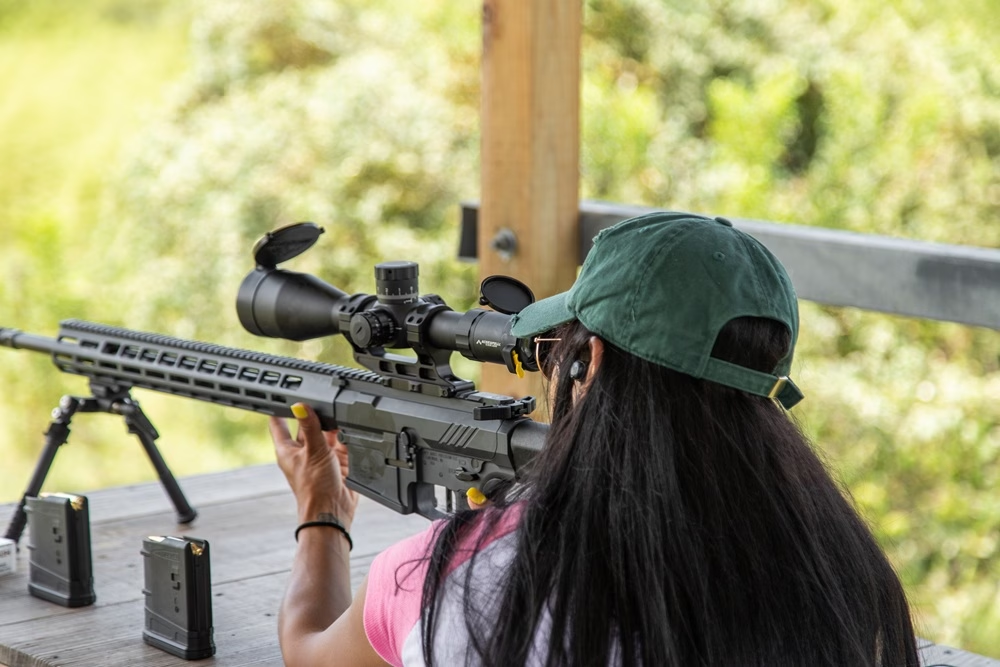
What Is An ACSS Reticle?
ACSS stands for Advanced Combined Sighting System. In practical use, it refers to a reticle design that brings several aiming tools together inside one optic. Depending on the model, it may include bullet drop references, wind holds, moving target leads, ranging brackets, and quick center aiming features.
The main purpose is to reduce guesswork. Instead of dialing every correction or estimating every hold without reference points, the shooter can use the reticle’s built-in marks to make quicker decisions.
Because these reticles are feature-rich, they are popular with shooters who want a more useful aiming system for distance work, training, hunting, and practical rifle use.
Long-Range Shooting Benefits
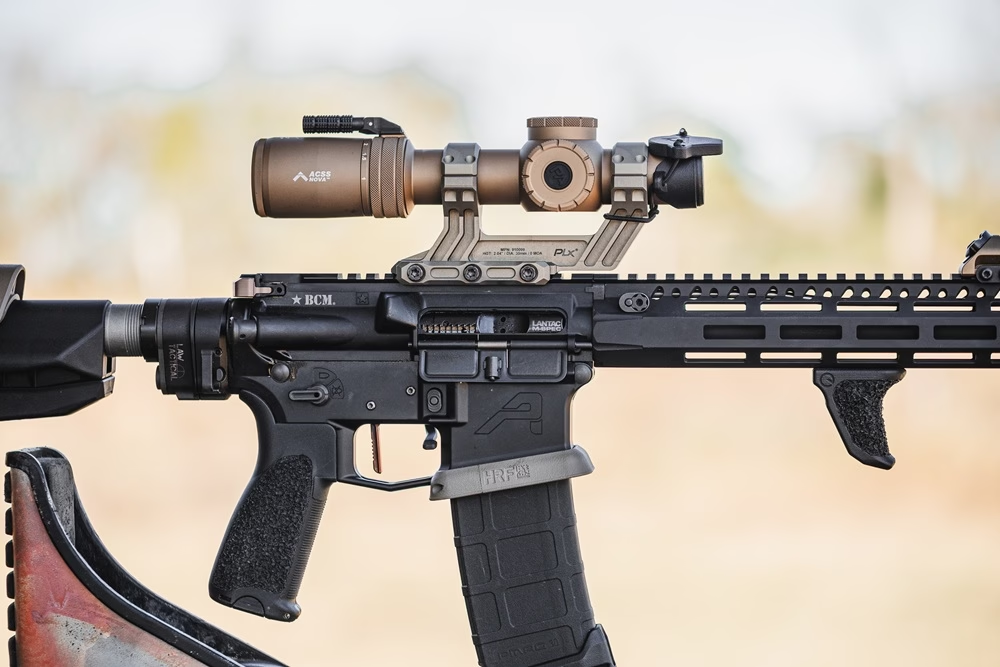
Long-range shooting requires more than simply placing a crosshair on the target. Bullet drop, wind, distance, and target size all affect the final point of impact. ACSS reticles can help by giving the shooter visible reference points inside the sight picture.
For example, a bullet drop compensation ladder can help hold for distance without needing to dial the elevation turret every time. In addition, wind references can help estimate a better hold when crosswinds are present.
These features are useful when speed matters. Rather than pausing to make every adjustment mechanically, the shooter can use reticle holds to stay engaged and make faster corrections.
Fast Holdovers
Holdover references make it easier to aim at different distances. Once the optic and ammunition are properly matched, the shooter can use the reticle marks as a quick guide for elevation changes.
Wind Hold Support
Wind is one of the hardest factors to judge at distance. Although no reticle removes the need for skill, ACSS wind references can give the shooter a better starting point for holding left or right.
Precision Rifle Use
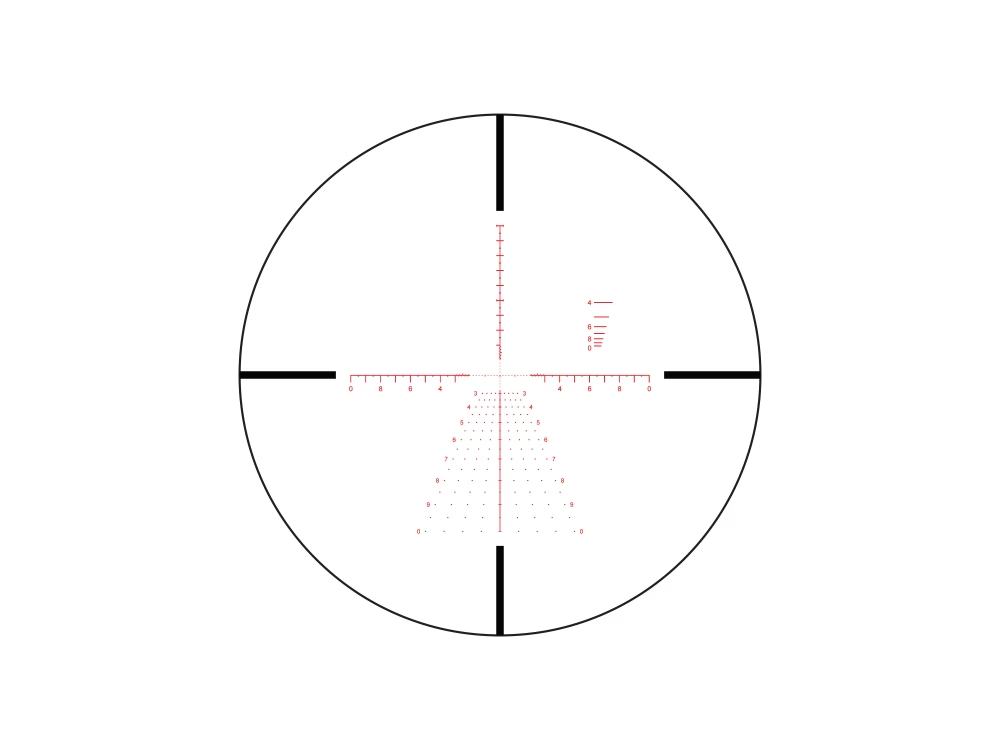
Precision rifle use depends on repeatability, clarity, and good information. A strong reticle can help the shooter measure, hold, correct, and stay consistent without losing time.
ACSS reticles can be especially useful when paired with quality glass and reliable turrets. The reticle gives visual information, while the turret system can still be used for precise dialing when needed.
For practical shooting, this balance is valuable. Shooters can dial when they have time, hold when speed matters, and use the reticle to observe corrections after impact.
Ranging And Target Reference
Some ACSS reticles include ranging tools based on known target sizes. This can help estimate distance when a laser rangefinder is unavailable or when the shooter wants a quick visual reference.
ACSS Reticle Features
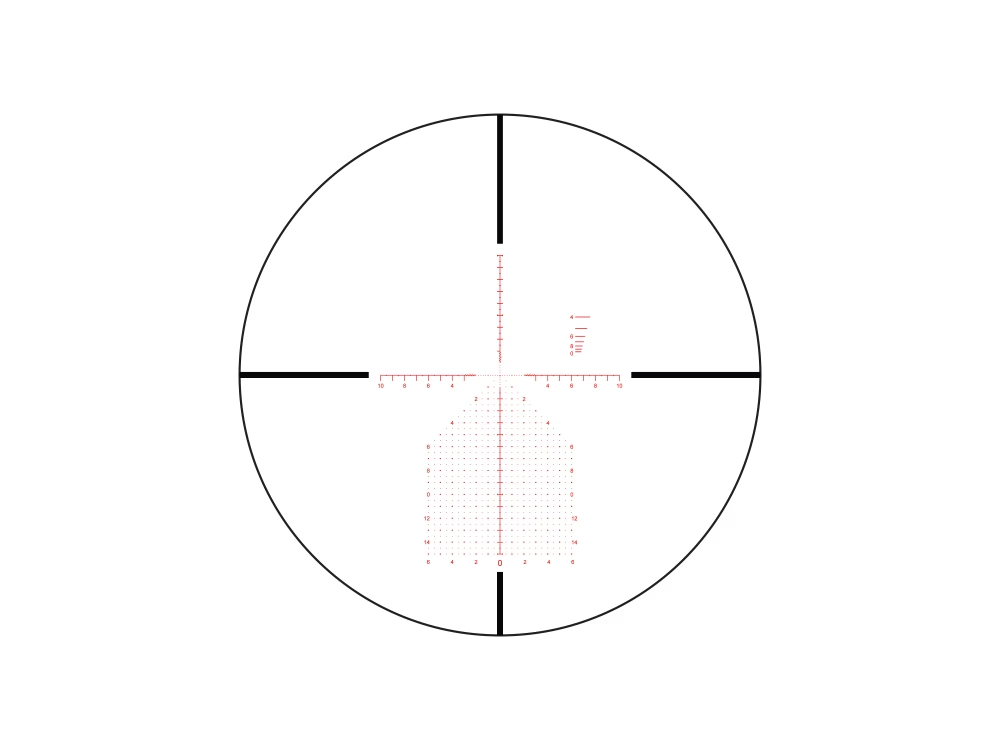
ACSS reticles vary by optic model, but many share the same core idea: give the shooter more usable information without making the reticle too slow to use.
- Bullet drop holds help compensate for distance.
- Wind holds help with left and right corrections.
- Ranging marks can help estimate target distance.
- Center aiming features help with fast target acquisition.
- Moving target leads may help when tracking moving targets.
Because these reticles include several tools, users should spend time learning the design before relying on it. Once understood, the reticle can become faster and more natural to use.
Choosing An ACSS Scope
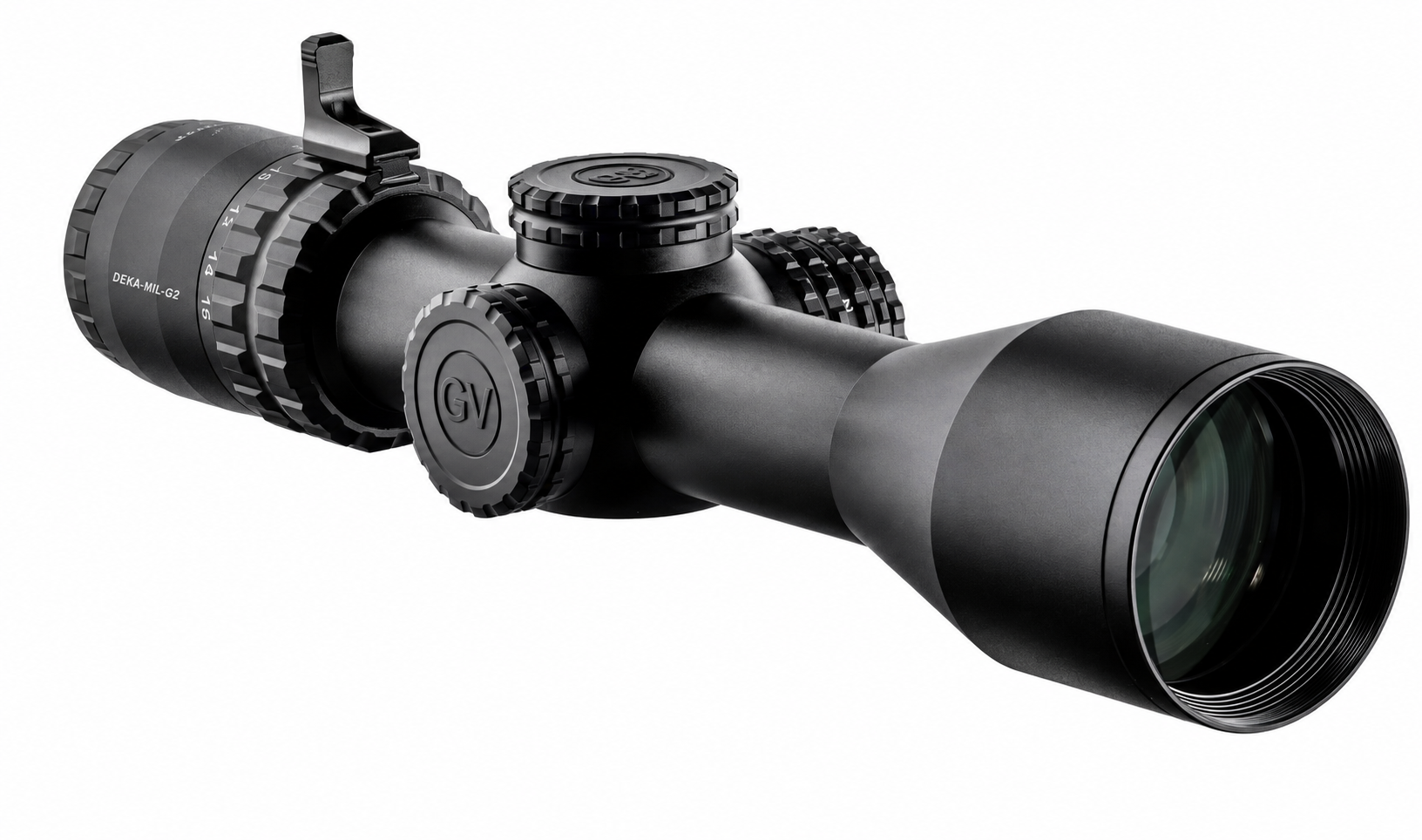
When choosing an ACSS scope, think about the rifle’s purpose first. A compact LPVO may work well for close-to-mid range use, while a higher-magnification scope may be better for distance and precision work.
Also compare reticle type, magnification range, first focal plane versus second focal plane design, illumination, turret quality, eye relief, glass clarity, and mounting height. The best scope is the one that matches your rifle and use case.
Conclusion
ACSS reticles stand out because they combine useful aiming tools into one sight picture. For long-range shooting and precision rifle use, this can help with holdovers, wind references, ranging, and faster target engagement.
However, the reticle is only one part of the system. Shooters still need a properly mounted optic, confirmed zero, consistent ammunition, and practice. With the right setup, an ACSS-style reticle can be a strong choice for practical accuracy.