Training
TL;DR
Cross-eye dominance means your preferred visual eye and your dominant hand are on opposite sides. It is common enough that shooters should view it as an adaptation issue rather than a barrier.
- First step: Determine which eye is dominant before changing your training habits.
- For handguns: Small changes in head position, presentation, and visual alignment may make the sight picture more comfortable.
- For long guns: Eye position is more closely tied to the stock and optic, so experimentation may require more deliberate practice.
- Optics: Red dots and similar non-magnified sights can be easier for some cross-dominant shooters to use with both eyes open.
- Best approach: Use safe, repeatable practice and qualified instruction rather than forcing an uncomfortable technique.
Cross-Eye Dominant Shooting 2026: Test, Adapt & Improve
Vision plays an important role in shooting because your eyes help establish visual focus and alignment. For many people, the dominant eye and dominant hand are on the same side of the body. However, that is not true for everyone.
Cross-eye dominant shooting describes the situation in which the eye your brain naturally prefers is opposite your dominant hand. A right-handed person may, for example, favor the left eye, while a left-handed person may favor the right.
Cross-dominance does not automatically prevent someone from becoming comfortable with a firearm. Instead, it means that visual alignment may require some experimentation, practice, and potentially guidance from a qualified instructor.
Gunvexa Safety Note
This guide discusses eye dominance and general adaptation concepts. Always follow the safety rules for your firearm and range, keep firearms pointed in a safe direction, use suitable eye and hearing protection, and seek qualified in-person instruction when learning a new shooting technique.

Understanding Cross-Eye Dominance
Eye dominance refers to the tendency for the brain to rely more heavily on visual information from one eye. The preferred eye is commonly called the dominant eye.
When your dominant eye and dominant hand match, visual alignment often feels natural. With cross-dominance, however, the preferred eye is positioned on the opposite side. This can make a familiar stance or sight picture feel slightly different.
Before changing anything about your technique, it helps to identify which eye your brain naturally favors.
Eye Dominance Test
A basic eye-dominance check can be performed without special equipment. Choose a small object across the room and use your hands to create a small opening through which you can view it.
- Pick a fixed object several feet away and look at it with both eyes open.
- Extend your hands and create a small opening between them while keeping the object visible through the center.
- Without moving your hands, close one eye and then the other.
- The eye that keeps the object most consistently centered is generally your dominant eye.
Same-Side Dominance
Your dominant eye and dominant hand are on the same side, such as right-hand/right-eye or left-hand/left-eye.
Cross Dominance
Your dominant eye is opposite your dominant hand, such as right-hand/left-eye or left-hand/right-eye.
Does Cross-Eye Dominance Need to Be Corrected?
Not necessarily. The better question is whether your current visual alignment feels comfortable, repeatable, and safe. Some people make small adjustments, while others prefer to change which eye or side they use for a particular platform.
Individual vision, body structure, experience, and equipment all affect what feels natural. Therefore, there is no single adaptation that works best for everyone.
Quick Answer
Can Cross-Dominant Shooters Still Shoot Comfortably?
Yes. Cross-eye dominance is primarily an alignment and training consideration. Testing different safe approaches with a qualified instructor can help you determine which option feels most natural and repeatable.
Pistol Shooting Techniques
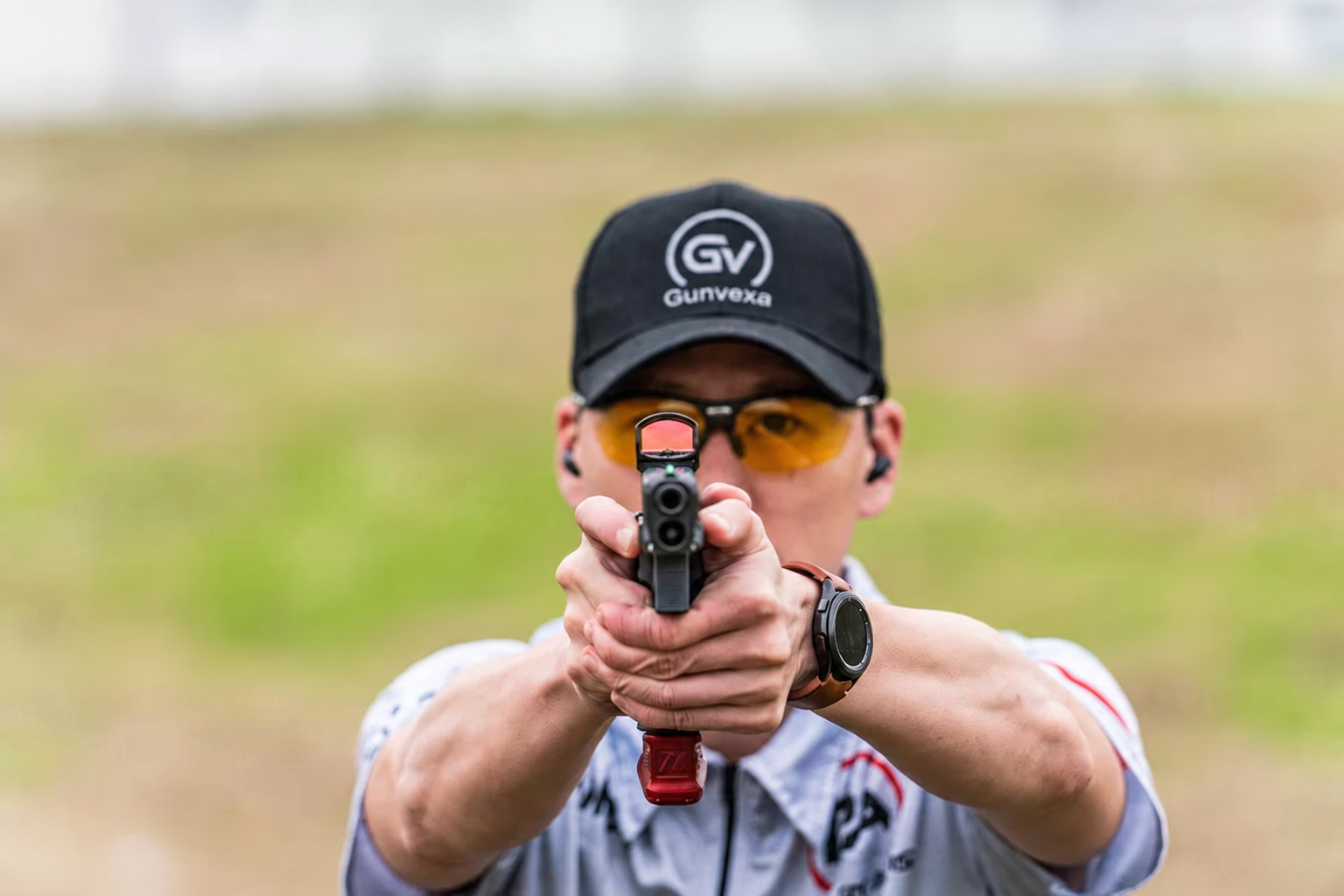
Handguns provide more flexibility in visual alignment because they are not anchored to the shoulder in the same way as a rifle or shotgun. That can make cross-dominance easier to accommodate for some shooters.
Rather than immediately changing hands or trying to suppress one eye, begin by identifying whether a comfortable head position and natural presentation allow your preferred eye to obtain a clear view of the sights.
Keep the Adjustment Small
Large or exaggerated changes can make a shooting position uncomfortable and inconsistent. A better approach is to make small changes under safe, supervised conditions and determine whether the visual picture becomes easier to acquire.
Both-Eyes-Open Shooting
Some shooters prefer keeping both eyes open, particularly when using a non-magnified optic. Others find that visual competition between the eyes initially makes this difficult.
There is no need to force the technique immediately. Comfort and consistency usually improve through gradual practice rather than dramatic changes.
Switching Hands
Some cross-dominant shooters experiment with using the hand that matches the dominant eye. For others, changing hands feels less natural than adapting eye alignment.
Because both approaches can require new coordination, make changes gradually and preferably under the supervision of an experienced instructor.

Rifle Shooting Techniques
Cross-eye dominance can feel more noticeable with a rifle because the shooter's head, cheek position, shoulder, stock, and sighting system are more closely connected.
As a result, the simple head-position changes that may work comfortably with a handgun do not always translate directly to a long gun.
Shooters generally have two broad adaptation paths: work with the current shoulder and train the eye on that side, or explore using the opposite shoulder so the firearm naturally aligns with the dominant eye.
Keep Your Established Side
This may make sense for someone who already has strong coordination and comfort on that side and does not want to rebuild their entire position.
Explore the Opposite Side
Some shooters prefer matching the shoulder to the dominant eye. This can require more practice, especially if the opposite hand is less coordinated.
Shotgun Techniques
Eye dominance can also be particularly noticeable with shotguns because visual alignment is heavily influenced by the relationship between the shooter's eye and the stock.
If cross-dominance creates an inconsistent view, avoid making large changes without guidance. A qualified instructor can help evaluate stance, stock fit, eye position, and which side provides the most repeatable setup.

Optics
Optics can change how cross-dominance feels. A conventional magnified scope usually places the shooter's viewing eye in a relatively fixed position, while non-magnified red-dot sights can provide more flexibility.
For some shooters, a red dot makes it easier to keep both eyes open because the aiming reference appears in the field of view rather than requiring the eye to focus through a narrow magnified image.
Shooters who see distortion or starburst effects when viewing an illuminated dot may prefer to compare alternative sighting systems such as prism optics. Individual vision varies, so try different options before assuming one design will work best.
Optics Tip
Choose the Sight Picture That Feels Natural
The best optic is not automatically the one with the most features. For cross-dominant shooters, clear visual acquisition, comfortable eye placement, and a repeatable setup matter more than following one universal solution.

Conclusion
Cross-eye dominant shooting does not have one universal solution. Your dominant eye, dominant hand, firearm platform, optic, experience, and physical comfort all affect which adaptation works best.
Begin by identifying your dominant eye. From there, make small, controlled changes rather than rebuilding your technique all at once. Handguns often provide more flexibility in visual alignment, while rifles and shotguns may require more consideration because the shooter's eye position is linked more closely to the stock and shoulder.
Most importantly, prioritize safe and repeatable habits. Qualified instruction can shorten the learning process and help you determine whether changing eye alignment, shooting side, optic, or a combination of those options makes the most sense.
Gunvexa Bottom Line
Test First, Then Adapt
Do not change your entire technique simply because an eye-dominance test shows cross-dominance. Test your vision, identify what actually creates a problem, and make the smallest safe adjustment that produces a comfortable, repeatable result.
Frequently Asked Questions (FAQ)
What does cross-eye dominant mean?
Cross-eye dominance means the eye your brain naturally favors is opposite your dominant hand. A right-handed person may be left-eye dominant, or a left-handed person may be right-eye dominant.
How can I test which eye is dominant?
View a fixed object through a small opening created with your hands, then alternately close each eye without moving the opening. The eye that keeps the object most centered is generally the dominant eye.
Can you shoot if your dominant eye and hand are opposite?
Yes. Cross-dominance is an adaptation issue, not an automatic barrier. Shooters may experiment with eye position, visual alignment, shooting side, and optics under safe practice conditions.
Should a cross-eye dominant shooter switch hands?
Not necessarily. Some people find switching sides useful, while others are more comfortable maintaining their dominant hand and adapting their visual alignment. The best option depends on the individual and the firearm platform.
Are red dot sights useful for cross-eye dominance?
They can be. Non-magnified red-dot sights allow some shooters to maintain a more open visual field and can feel easier to use with both eyes open. Individual vision still varies, so personal testing is important.