
Gear
The topics on nearly every firearm enthusiast’s mind today often include suppressors. At Gunvexa, we believe customers should understand what suppressors are, how they developed, and why modern suppressor technology has become such an important part of firearm accessories, range gear, and tactical equipment.
Suppressors have changed a lot over the years. Early designs were basic, heavy, and limited, while modern options are built with better materials, improved mounting systems, stronger engineering, and more refined performance. This Gunvexa guide explains the evolution of suppressor technology in a clear, SEO-friendly way for shoppers, collectors, and responsible firearm owners.
Before choosing a suppressor, it helps to understand the history behind them and how modern designs became quieter, lighter, stronger, and more practical for different firearm platforms.
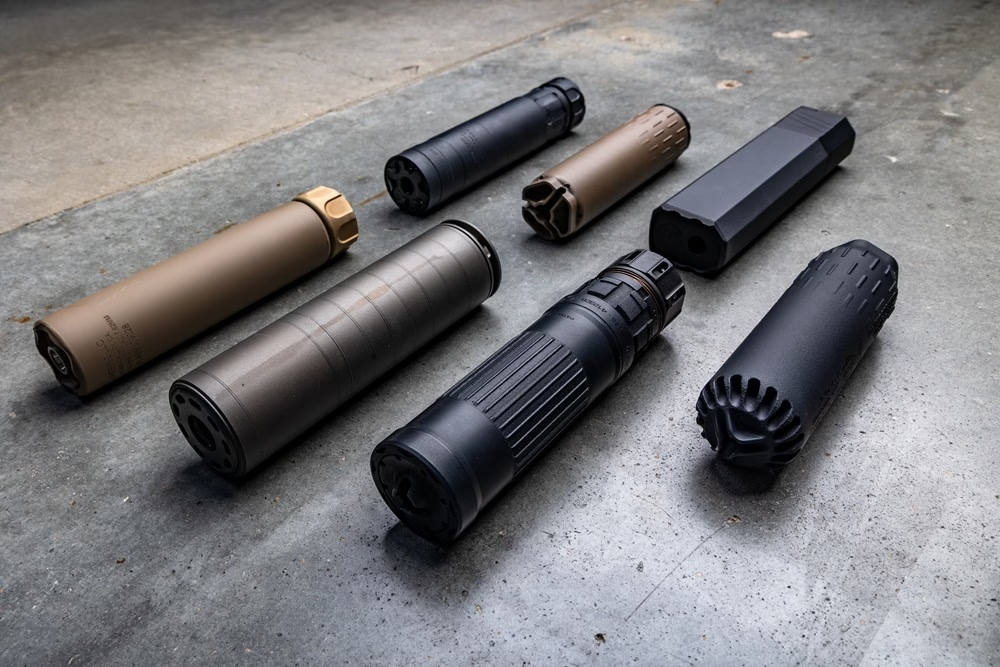
What Is A Suppressor
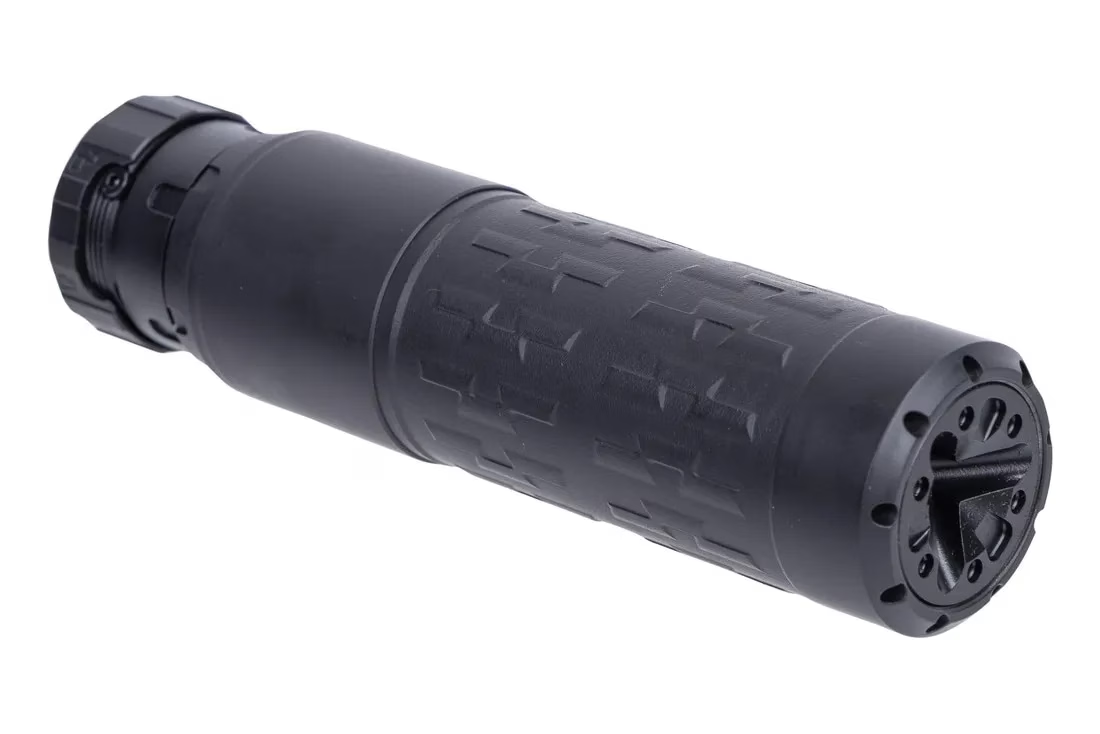
A suppressor, sometimes called a silencer, is a firearm accessory designed to attach to the muzzle end of a rifle or pistol barrel. Its main purpose is to help reduce the sound and flash created when a cartridge is fired by slowing and controlling expanding gases.
Suppressors are not all the same. Some are designed for pistols, others for rifles, rimfire firearms, or multiple calibers. Each type is built around specific pressure levels, barrel threads, mounting systems, and intended use.
Pistol Suppressors
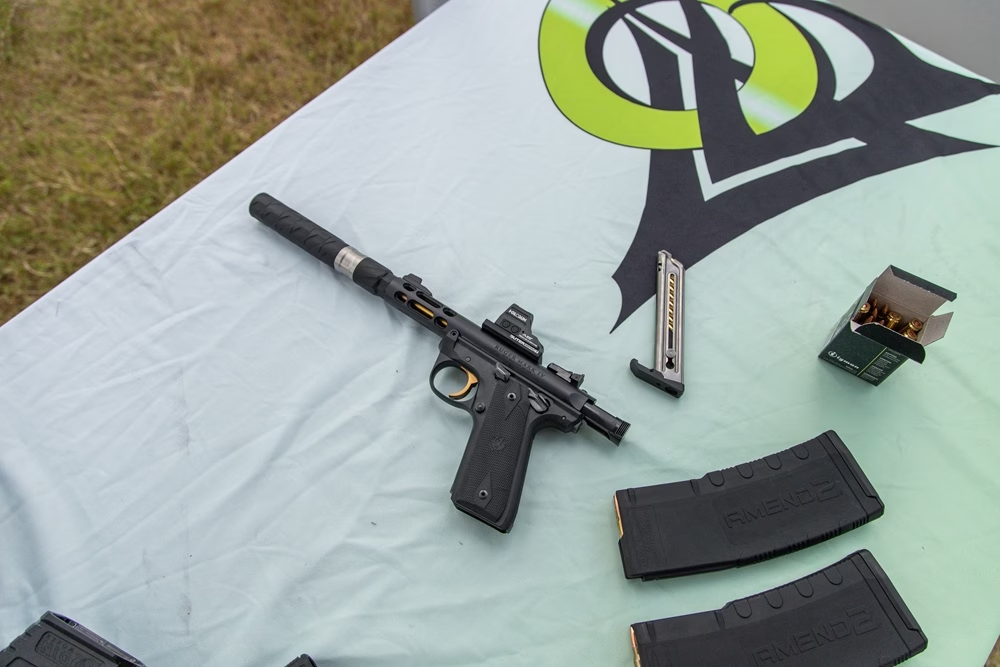
Pistol suppressors are usually designed for handgun calibers such as 9mm and .45 ACP. Many use mounting systems that help them function properly with common pistol platforms. They are popular with shooters looking for controlled sound, reduced flash, and a more comfortable range experience.
Rifle Suppressors
Rifle suppressors are built to handle higher pressures from intermediate and full-power rifle cartridges. They are commonly made from durable materials such as stainless steel, titanium, Inconel, or other specialized alloys that can better manage heat, pressure, and repeated use.
Multi-Caliber Suppressors
Multi-caliber suppressors are designed to work with more than one caliber when used correctly with compatible firearms and accessories. They can be a practical choice for customers who want flexibility across different platforms.
Are They Necessary?
Suppressors are not required for every firearm setup, but many shooters value them for sound mitigation, flash reduction, and improved shooting comfort. For range use, training, hunting, and collection purposes, a properly selected suppressor can be a useful addition.
Origins Of The Suppressor
The idea behind suppressor technology goes back more than a century. Early inventors explored ways to reduce firearm noise by controlling the gases that escape after a shot. These first designs were simple compared with modern suppressors, but they helped shape the category.
One of the most recognized early names in suppressor history is Hiram Percy Maxim, who developed commercially successful suppressor designs in the early 1900s. These early models used internal structures to slow gas expansion and reduce the sound signature of a firearm.
During the first half of the twentieth century, suppressor use remained limited. Military interest existed, but widespread civilian popularity came much later as manufacturing, materials, and firearm accessory markets developed.
1970s To 1990s: Early Modern Suppressor Designs
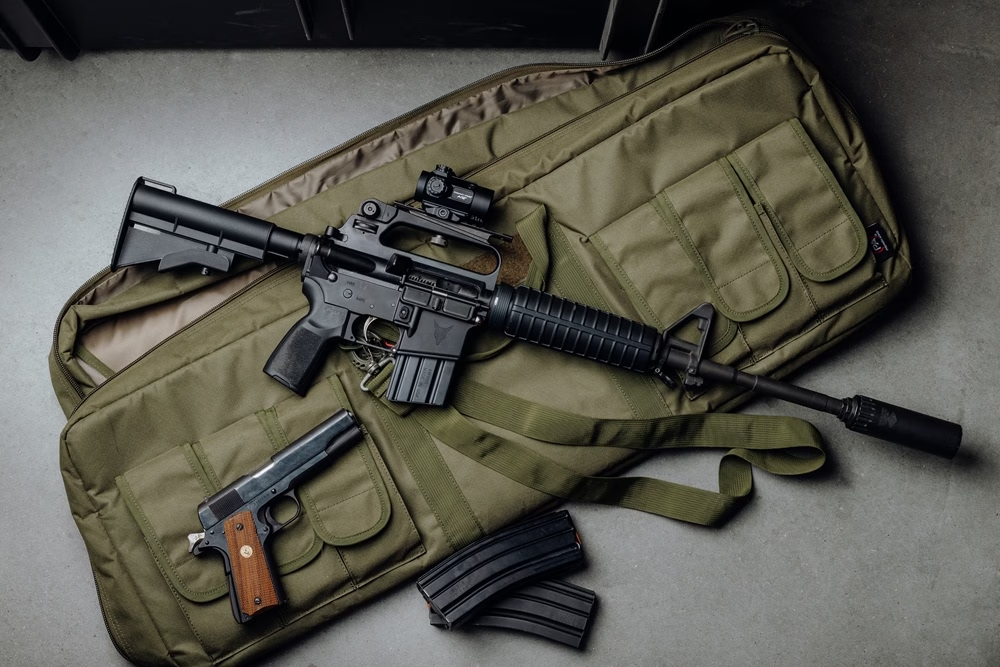
From the 1970s through the 1990s, suppressor designs became more refined. Manufacturers began improving internal baffle layouts, materials, attachment methods, and compatibility with popular firearm platforms.
During this period, many suppressors were still heavier and less specialized than today’s models. However, the foundation for modern suppressor technology was already taking shape. Companies and designers started paying more attention to sound reduction, heat resistance, point-of-impact shift, durability, and ease of use.
For customers comparing firearm accessories today, this era matters because it helped move suppressors away from basic tube-style concepts and toward more engineered, purpose-built designs.
The 2000s: Diversification And Precision Engineering
By the 2000s, suppressor technology had entered a more advanced stage. Better machining, computer-aided design, improved testing, and stronger materials allowed manufacturers to create more consistent suppressor designs.
During this era, suppressors became more diverse. Rifle suppressors, pistol suppressors, rimfire suppressors, quick-detach suppressors, and multi-caliber suppressors all became easier to compare. Customers had more options depending on their firearm platform, budget, and performance goals.
New Manufacturers And Technologies
Modern suppressor manufacturing benefited from better internal geometry, stronger alloys, improved welding methods, and more precise machining. These changes helped reduce weight, improve durability, and create suppressors that performed better across different calibers and applications.
As technology improved, mounting systems became a major focus. Quick-detach mounts, direct-thread systems, muzzle devices, and modular suppressor parts gave shooters more control over how they configured their firearm accessories.
The 2010s To Present Day: Brand Innovation And Cutting-Edge Technology
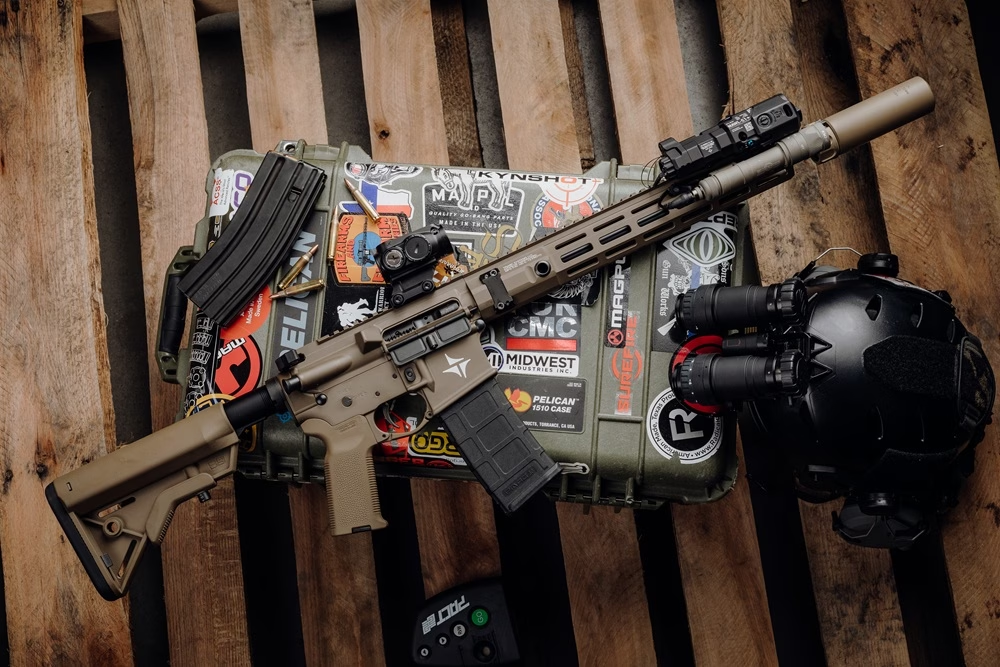
From the 2010s to today, suppressor innovation has grown quickly. Modern suppressor brands now focus on lighter materials, stronger construction, reduced back pressure, improved sound reduction, better flash control, and more specialized options for different firearm platforms.
SureFire
SureFire became well known for durable rifle suppressors and muzzle device mounting systems. Their suppressor designs helped popularize reliable quick-attach solutions for serious rifle users.
SilencerCo
SilencerCo helped expand the commercial suppressor market by offering a broad range of suppressors for pistols, rifles, rimfire firearms, and specialty platforms. Their product variety helped make suppressor shopping easier for different types of customers.
Dead Air
Dead Air became popular for rugged suppressor designs and mounting options. Their multi-caliber and rifle suppressor lineups helped push the market toward more flexible, user-friendly configurations.
HUXWRX
HUXWRX is known for flow-through suppressor technology designed to reduce back pressure and improve the shooting experience on certain firearm platforms. This type of innovation shows how modern suppressor engineering continues to evolve.
Conclusion
Suppressor technology has come a long way. What started as simple sound-reduction concepts has developed into a modern category of advanced firearm accessories built around materials, engineering, mounting systems, and real-world performance.
For Gunvexa customers, understanding suppressor history makes it easier to compare products, learn the difference between pistol and rifle suppressors, and choose gear that fits the right platform. Whether you are researching suppressor technology, tactical accessories, or modern range equipment, Gunvexa is built to help shoppers make smarter decisions.