
Safety
TL;DR
These gun safety rules focus on preventing unintentional discharges, controlling access, protecting people around you, and building responsible habits every time a firearm is handled.
- Treat every firearm as though it is loaded.
- Keep the muzzle pointed in a safe direction.
- Keep your finger off the trigger until you have made the decision to fire.
- Know your target and what is around and beyond it.
- Verify unloaded status before cleaning, maintenance, storage, or transfer.
- Use appropriate eye and hearing protection.
- Use the correct ammunition and follow the firearm manufacturer's instructions.
- Secure firearms when they are not under your direct control.
- Restrict unauthorized access and control keys, combinations, and access codes.
- Maintain basic emergency preparedness and seek proper first-aid or bleeding-control training.
Gun Safety Rules 2026: 10 Essentials Every Owner Should Know
Gun safety rules are the foundation of responsible firearm ownership. Whether a firearm is used for sport, hunting, professional purposes, collecting, or lawful personal protection, safe handling habits should remain the same every time it is picked up, moved, stored, or transferred.
Because mistakes around firearms can have severe consequences, safety should never depend on experience alone. In fact, experienced owners benefit from reviewing the fundamentals regularly because repetition helps prevent complacency.
This Gunvexa 2026 guide explains ten essential gun safety rules, beginning with the four universal handling principles and then covering unloaded checks, protective equipment, ammunition, secure storage, access control, and emergency preparedness.
Gunvexa Safety Note
This article is educational and focuses on widely recognized firearm-safety principles. Always follow the instructions supplied with your specific firearm, obey range commands, and comply with all applicable storage, transport, possession, and firearm laws in your jurisdiction.
The Four Rules of Firearm Handling
The first four gun safety rules work together as overlapping layers of protection. One rule should never be treated as a substitute for another. Instead, responsible handling means following all four at the same time.
1
Treat Every Firearm as Loaded
Never assume a firearm is unloaded because someone tells you that it is. Handle it with the same care you would use if ammunition were present.
2
Keep the Muzzle in a Safe Direction
The muzzle should remain pointed away from people and anything you are not willing to damage. Consider what is around and beyond the direction in which the firearm is pointed.
3
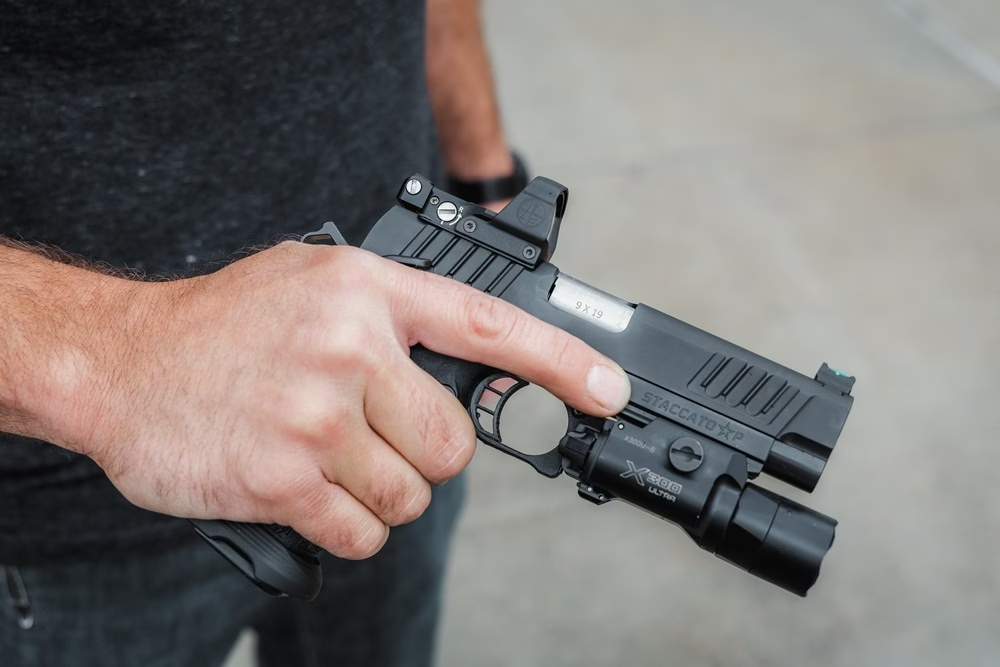
Keep Your Finger Off the Trigger
Keep your trigger finger outside the trigger guard until you have intentionally decided to fire at an appropriate target.
4
Know Your Target and Beyond
Confirm what the target is, what surrounds it, and what may be behind it before making the decision to fire.
Why These Four Gun Safety Rules Matter
Each principle addresses a different potential failure. For example, safe muzzle direction limits the consequences of an unintended discharge, while trigger discipline reduces the chance of causing one. Likewise, identifying the target and background helps prevent a shot from being directed somewhere unsafe.
Therefore, the safest approach is not to rely on a mechanical safety, unloaded status, or personal experience by itself. Instead, the four rules should become automatic habits whenever a firearm is under your control.

Safe Handling in Practice
The next part of responsible firearm ownership is applying the core rules during ordinary handling. Consequently, safe habits should continue even when you believe a firearm is unloaded.
- Essential 5 — Verify unloaded status. Before cleaning, maintenance, storage, transport, or handing a firearm to another person, keep it pointed safely, remove the ammunition source where applicable, open the action, and verify the firearm according to the manufacturer's procedure.
- Essential 6 — Use appropriate eye and ear protection. Shooting can expose users and bystanders to high sound levels, hot gases, fragments, and other hazards. Use suitable protective equipment and follow all range safety instructions.
- Essential 7 — Use the correct ammunition and follow the manual. Only use ammunition specified by the firearm manufacturer. In addition, follow the owner's manual for operation, inspection, maintenance, and safe handling.
Important Habit
Never Let Familiarity Replace Safety
Many unsafe situations begin when routine handling becomes automatic. Even if you have used the same firearm for years, continue following the same muzzle, trigger, target, and unloaded-verification discipline every time.

Safe Gun Storage
Safe storage remains one of the most important gun safety rules when the firearm is no longer in your hands. A firearm that is not under your direct control should be secured against unauthorized access.
- Essential 8 — Lock firearms securely. Depending on your circumstances and local law, suitable storage may include a locked safe, lockbox, secured cabinet, or another appropriate locking system designed to prevent unauthorized access.
- Essential 9 — Control access. Keep keys, combinations, access codes, and other unlocking methods away from unauthorized people. Ammunition should also be stored responsibly and in accordance with applicable laws and manufacturer guidance.
Children and Unauthorized Users
Storage decisions should account for everyone who may enter the home, including children, visitors, and people who are not trained or authorized to handle a firearm. Therefore, simply placing a firearm out of sight is not the same as securing it.
Moreover, owners should consider how easily another person could obtain keys or learn a combination. Responsible storage means controlling both the firearm and the method used to access it.

General Preparedness: First Aid Supplies
Responsible ownership also includes preparing for emergencies. A first-aid kit does not replace safe firearm handling, but it can be useful for ordinary injuries as well as more serious emergencies while professional medical help is being contacted.
- Essential 10 — Maintain emergency preparedness. Keep appropriate first-aid supplies available, know how to contact emergency services, and consider recognized first-aid or bleeding-control training rather than relying on equipment you have never been trained to use.
First-Aid and Trauma Kit Basics
A general emergency kit may include gloves, sterile dressings, gauze, bandages, trauma shears, and other supplies appropriate to your level of training. Severe bleeding-control equipment should be selected and used according to recognized training and product instructions.
Most importantly, serious injuries require professional medical care. Contact emergency services promptly and follow their instructions rather than delaying help while searching for equipment.


Conclusion
The best gun safety rules are the ones you follow consistently. Treating every firearm carefully, maintaining safe muzzle direction, practicing trigger discipline, and identifying the target and background create the foundation.
From there, proper unloaded verification, protective equipment, correct ammunition, secure storage, access control, and emergency preparedness add further layers of protection.
Ultimately, responsible firearm ownership depends on habits rather than shortcuts. Continue reviewing your firearm's manual, obey local laws, follow range instructions, and seek qualified training whenever you need additional guidance.
Gunvexa Bottom Line
Make Safety Automatic
The goal of these 10 essentials is not simply to memorize a list. It is to make safe direction, trigger discipline, unloaded verification, secure storage, and responsible access control part of every interaction with a firearm.
Safety Resources & Further Reading
NSSF — Firearm Safety Resources
Project ChildSafe — Secure Storage Education
STOP THE BLEED — Bleeding-Control Education
Browse more Gunvexa firearm safety and ownership guides .
Frequently Asked Questions (FAQ)
What are the four rules of gun safety?
Treat every firearm as loaded, keep the muzzle pointed in a safe direction, keep your finger off the trigger until you intentionally decide to fire, and know your target and what is around and beyond it.
How do you safely check that a firearm is unloaded?
Keep the firearm pointed in a safe direction and follow the manufacturer's unloading and inspection procedure. Remove the ammunition source where applicable, open the action, and verify the chamber and relevant feeding areas before maintenance, storage, or transfer.
What is the safest way to store a gun at home?
Use a secure locking system appropriate to your firearm, household, and local law. Prevent unauthorized access and keep keys, combinations, and access codes controlled.
What is a negligent discharge, and how is it different from an accidental discharge?
A negligent discharge generally refers to an unintended firing associated with a failure to follow safe handling practices. An accidental discharge may describe an unintended firing caused by another factor, such as a verified mechanical problem. Regardless of terminology, basic gun safety rules are designed to reduce the chance of injury if something unexpected occurs.
What should be in a firearm first aid or trauma kit?
Appropriate contents depend on your training. General supplies may include gloves, dressings, gauze, bandages, and trauma shears. More specialized bleeding-control equipment should be selected and used with recognized training, while serious injuries require prompt emergency medical assistance.