Government
TL;DR
This Holosun Duty Optics Guide compares enclosed and open pistol sights, rifle red dots, P.ID weapon lights, and laser or IR systems for duty-oriented setups.
- Duty pistols: Enclosed emitters provide added protection from rain, dust, lint, and debris.
- Open reflex sights: Often lighter and visually open, but the exposed emitter needs more attention in harsh conditions.
- Rifles and carbines: Wide-window red dots can provide fast target acquisition and a generous sight picture.
- Illumination: The P.ID family adds white-light options for compatible duty handguns and other platforms.
- Specialized use: LE117-IR and IRIS-series devices are aimed at users who require laser or night-vision-compatible capability.
Holosun Duty Optics Guide Overview
Gunvexa Duty Optics GuideThis Holosun Duty Optics Guide explains how the brand's duty-oriented sights and related equipment differ across service pistols, patrol rifles, and professional setups. Because Holosun offers several sizes, footprints, enclosure styles, and feature levels, the right choice depends on more than a model name.
Instead, buyers should compare enclosure style, mounting footprint, window size, reticle options, brightness controls, environmental protection, and compatibility with the host firearm or mounting system. In addition, lights and laser devices need to be evaluated separately because they solve different problems than an optic.
This Gunvexa guide explains the major categories shown throughout Holosun's current duty-oriented lineup. It focuses on published product characteristics and practical fit considerations rather than claiming laboratory results that Gunvexa has not independently measured.
You can also browse more Holosun articles on Gunvexa and the wider Gunvexa gear guide library. For manufacturer information, visit Holosun's official website.
Gunvexa Research Note
This is an editorial comparison based on manufacturer-published specifications, product documentation, and fit or use-case analysis. Product generations, footprints, included mounts, reticles, and ratings can change, so verify the exact current model before ordering or issuing equipment.
Holosun Duty Optics Guide for Pistols
Pistol-mounted red dots are now available in both open and enclosed formats. For professional carry, the distinction matters because exposure to rain, mud, dust, lint, and impact can affect how easy an optic is to keep clear. Therefore, the first decision is usually not simply which dot looks best, but which housing style best matches the environment and maintenance routine.
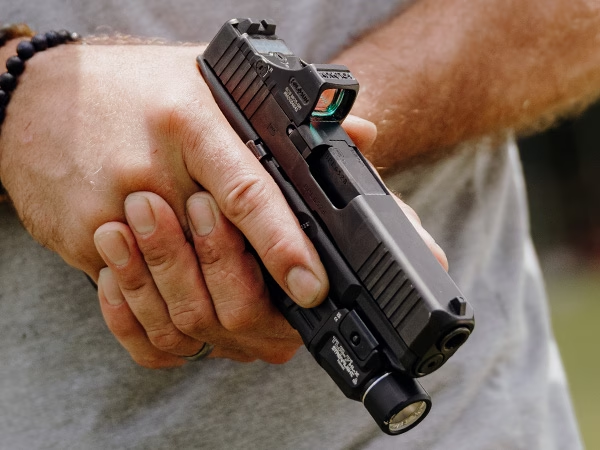
Holosun Enclosed-Emitter Duty Optics (HE509T, EPS-Carry, SCS-CARRY)
Enclosed-emitter sights place the LED system inside a sealed housing rather than leaving the emitter exposed behind a single lens. Consequently, debris is less likely to obstruct the light path between the emitter and the viewing window. That makes this format attractive for full-time duty use, outdoor work, and daily carry.
Models such as the HE509T family emphasize a rugged enclosed design, while compact products in the EPS Carry family are intended for smaller pistol footprints. The SCS line takes a different approach by pairing model-specific fitment with solar-assisted power management on supported configurations. Because footprints and slide cuts differ, compatibility should always be verified before purchase.
Best fit for enclosed pistol optics
Choose an enclosed emitter when environmental protection and a protected light path matter more than minimizing every possible ounce or millimeter of optic size.

Holosun Open Reflex Duty Optics (HE507C, HS407K-X2)
Open reflex sights remain popular because the architecture can be compact, light, and visually uncluttered. The exposed-emitter design also allows a broad window without surrounding it with a full rear enclosure. As a result, many users like the fast presentation and lower-profile feel.
The trade-off is that the emitter channel is more exposed. Water droplets, mud, lint, or other debris may require the shooter to clean the optic more carefully. Even so, an open design can still be a sensible choice when the pistol is routinely inspected and the user values size, weight, or a particular footprint.
Duty Pistol Optic Comparison
| Feature | Enclosed Emitter | Open Reflex |
|---|---|---|
| Emitter protection | Protected inside the housing | Emitter remains exposed |
| Typical advantage | Environmental protection | Compact, open sight picture |
| Maintenance concern | Keep front and rear windows clean | Keep lens and emitter channel clear |
| Fit check | Confirm footprint, plate, slide cut, and holster clearance | Confirm footprint, plate, slide cut, and holster clearance |
Holosun Duty Optics Guide for Rifles and Carbines
Rifle and carbine optics have different priorities than compact pistol sights. A larger viewing window, stronger mount, protected controls, and compatibility with magnifiers can matter more than keeping the optic extremely small. For that reason, Holosun duty optics for long guns often use broader housings and larger windows.
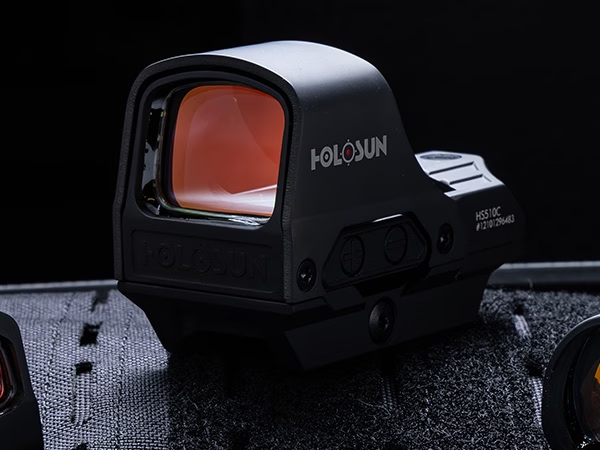
Holosun Rifle Duty Optics: Wide-Window Red Dots (HE510C, HE512)
The HE510C family is known for a wide viewing window that gives the user a large visual reference around the aiming point. In practical terms, that can make the sight feel less restrictive when transitioning between targets or using unconventional shooting positions.
The HE512 family moves toward a more enclosed housing, which can add protection around the optical system. Meanwhile, models across these families may offer features such as multiple reticle choices, motion-activated power management, or solar-assisted operation depending on the exact variant.
Before pairing a rifle sight with a magnifier, check mount height, eye relief, rail space, and whether the chosen mounts align correctly. Likewise, confirm the exact model's reticle, battery, housing material, and included mount rather than assuming every HE510 or HE512 variant is identical.
Holosun Duty Weapon Lights: P.ID Series
Optics help with aiming, while a white light serves a different role: illumination and identification in low-light conditions. Therefore, the P.ID family should be evaluated on light output, beam character, switching, power source, mounting compatibility, and the amount of space available on the host platform.

The P.ID line includes rail-mounted lights designed around modern pistol accessory rails, with specific versions adding different feature sets. Rather than choosing solely from a lumen figure, compare the overall beam pattern, candela or throw information where published, control layout, charging or battery arrangement, and whether the light fits the intended holster.
Holster compatibility is especially important because a weapon-mounted light changes the shape of the pistol's front end. In addition, some duty holsters index heavily around the light body. As a result, the exact pistol, light, optic, and holster combination should be checked as one complete system.
What to Check Before Choosing a P.ID Light
- Rail compatibility: confirm the light locks securely to the exact pistol or platform.
- Holster fit: verify the holster is designed for the specific light body.
- Controls: make sure switches are accessible without interfering with normal handling.
- Power system: compare battery or charging requirements with your maintenance routine.
- Published output: consider beam shape and throw, not only the headline lumen number.
Holosun Lasers and IR Devices: LE117-IR and IRIS Series Devices
Laser and infrared systems are more specialized than ordinary reflex sights or white lights. They can support night-vision-equipped users, but their value depends heavily on training, mission requirements, applicable policy, and the exact capabilities of the device.

The LE117-IR is an example of a compact IR-focused aiming device intended for use with compatible night-vision equipment. IR output is not meant to be evaluated with the naked eye, so users need the appropriate night-vision system and training before judging whether the device fits their requirements.
IRIS-series devices combine more functions in one housing, with model-dependent configurations that can include visible aiming, infrared aiming, or IR illumination. Consequently, these products should be compared by exact model rather than by family name alone.
For professional procurement, also check regulatory classification, output specifications, mounting requirements, activation controls, remote-switch compatibility, environmental ratings, and agency policy. Those details are often more important than simply choosing the smallest or most feature-rich unit.
Holosun Duty Optics Guide: How to Choose the Right Setup
The best Holosun duty optics setup is the one that matches the platform, environment, mounting system, and maintenance schedule. A compact carry pistol, full-size duty handgun, patrol rifle, and night-vision-equipped carbine all place different demands on the equipment.
Start With the Platform and Mount
First, identify the exact firearm, slide cut, optic footprint, plate system, rail height, or accessory interface involved. A high-quality optic that does not match the host platform is still the wrong choice. Additionally, check whether the selected optic changes sight height, iron-sight visibility, or holster clearance.
Compare the Environment
Next, consider exposure to weather, dust, debris, vehicle work, daily concealed carry, or hard outdoor use. An enclosed emitter may be worth the added size on a duty pistol, whereas a lighter open optic may be a better match for another role. Similarly, rifle sights and IR devices should be chosen around their actual operating environment rather than appearance alone.
Check the Exact Variant
Holosun model families can include different reticle colors, housing materials, footprints, included mounts, or feature packages. Therefore, verify the full model number before ordering. This is especially important when several products share a similar base name.
Plan Maintenance and Support
Finally, establish a battery, inspection, cleaning, and zero-confirmation schedule appropriate to your organization or personal use. Gunvexa recommends following the manufacturer's current manual and any applicable agency armorer or equipment policy.
Browse Gunvexa's Holosun search results for additional model coverage, or use Gunvexa customer support if you need help identifying the correct product category for your setup.
Gunvexa Verdict
Are Holosun Duty Optics Worth Considering?
Yes, when the exact model matches the required footprint, environment, controls, and support needs. The strength of the lineup is its breadth: users can choose among enclosed pistol sights, open reflex optics, rifle red dots, weapon lights, and specialized laser or IR systems instead of forcing one product format into every role.
Holosun Duty Optics Guide Conclusion
Holosun duty optics span far more than a single pistol red dot. The lineup now reaches from enclosed and open handgun sights to wide-window rifle optics, white lights, and specialized laser or IR devices.
For that reason, the most useful comparison is category by category. Enclosed pistol sights emphasize protection, open sights emphasize compactness and sight picture, rifle optics prioritize mounting and window size, and illumination or IR products solve separate low-light requirements.
Above all, verify the exact current model, published specifications, mounting interface, holster clearance, and manufacturer instructions before making a final choice. That approach is more reliable than selecting equipment from brand reputation or headline specifications alone.
Manufacturer Sources & Further Reading
Browse more Gunvexa Holosun articles .
Explore the Gunvexa blog for additional optics, gear, and equipment guides.
FAQs
Are enclosed Holosun pistol optics better for duty use?
Enclosed emitters can be especially useful for duty environments because the emitter is protected inside the housing. However, the best choice still depends on size, footprint, holster fit, and the exact conditions in which the optic will be used.
What is the difference between the HE510C and HE512 families?
Both are rifle-oriented red-dot families, but their housings and exact features differ by model. The HE510C is known for its broad open-style window, while HE512 variants use a more enclosed body. Always check the exact current model specifications.
What should I check before buying a Holosun P.ID light?
Confirm rail compatibility, holster fit, switch access, power requirements, and the published beam characteristics of the exact version you are considering.
Are Holosun IR devices useful without night vision?
IR-specific aiming functions are intended to be viewed through compatible night-vision equipment. A user without the appropriate night-vision system will not receive the intended benefit from an IR-only aiming function.
How do I choose among Holosun duty optics?
Start with the exact platform and mounting interface, then compare environmental protection, window size, reticle options, controls, power system, holster clearance, and the requirements of the role.