
Government
TL;DR
Astigmatism can make a pistol red dot look smeared, stretched, doubled or starburst-shaped even when the optic itself is functioning normally. The best solution is usually a combination of vision correction, sensible brightness and a reticle that your eye can interpret consistently.
- Start with your eyes: an eye exam is the most reliable way to confirm astigmatism and update a prescription if needed.
- Reduce unnecessary brightness: an over-bright reticle can look larger and less defined for many users.
- Test more than one reticle: dot size, circle-dot layouts and color can look different from person to person.
- Do not assume green is automatically better: some users prefer it, while others see little difference.
- Evaluate the exact optic yourself: personal visual response matters more than a specification sheet.
A pistol red dot can look perfectly crisp to one person and noticeably distorted to another. Astigmatism is one common reason. Because the eye does not focus incoming light evenly, a small illuminated reticle may appear like a comma, streak, cluster, flare or starburst instead of a clean point.
However, that does not mean every reflex sight will look unusable. In practice, brightness level, reticle design, viewing conditions and a person's corrective prescription can all change how the aiming mark is perceived. Therefore, the useful question is not simply whether a person has astigmatism, but which setup remains clear and repeatable for that individual's vision.
This Gunvexa guide explains the vision issue first, then looks at practical ways to evaluate a pistol red dot without assuming that one color, dot size or optic design works for everyone. For more related reading, browse the Gunvexa blog or search Gunvexa red-dot articles.
Medical & Research Note
This article is educational and is not a diagnosis. The National Eye Institute describes astigmatism as a common refractive error caused when the cornea or lens has a different shape than normal, which changes how light bends into the eye. If your vision is blurry, distorted, newly changed or difficult at night, an optometrist or ophthalmologist can evaluate it properly.

What Is Astigmatism?
Astigmatism is a refractive error. In simple terms, the cornea or lens is shaped differently enough that incoming light does not focus evenly on the retina. As a result, objects can look blurry or distorted at different distances. The National Eye Institute also lists eye strain, headaches and trouble seeing at night among common symptoms.
Importantly, astigmatism varies in strength and orientation. Two people can both have the condition yet describe illuminated points very differently. One may see a short streak, another may see several small points, and a third may mainly notice flare in dim conditions.
Astigmatism and Bright Points of Light
Small bright lights can make visual distortion more noticeable because a compact source gives the eye a very defined point to resolve. That is why some people first notice the issue around headlights, streetlights or illuminated reticles. Nevertheless, appearance alone cannot diagnose an eye condition, so persistent symptoms are a reason to schedule an eye exam.

How Astigmatism Distorts Red Dots
A reflex sight projects light from an emitter toward a coated lens so the user sees a virtual reticle. If the eye has astigmatism, that small image can lose its clean geometry before the brain interprets it. Consequently, the dot may appear stretched, fuzzy, duplicated or surrounded by flare.
Brightness is one of the easiest variables to test. A setting that is much brighter than the surrounding scene can make the reticle appear to bloom. Lowering the setting until the reticle is comfortably visible often gives the eye less glare to manage, although the amount of improvement varies by person.
Pistol Red Dot Brightness and Color
Reticle color is also individual. Some people report that green appears cleaner, while others prefer red or see similar distortion with both. Therefore, color should be treated as a personal comparison rather than a universal astigmatism fix. The same applies to dot size: a very fine dot is not automatically clearer simply because its specification is smaller.
How to Tell Whether the Optic or Your Eye Is Causing the Shape
A simple observation can help separate an eye-specific effect from an optic defect: view the reticle with each eye separately and compare what you see. You can also photograph the reticle with a phone camera. If the camera shows a clean reticle while your eye sees a flare or smear, that suggests the perceived shape is related to vision rather than the projected reticle. This is only a troubleshooting clue, not a medical test.

Why Use a Red Dot with Astigmatism?
Having astigmatism does not automatically rule out a pistol red dot. Many users can still identify a consistent center or reference point even when the illuminated shape is not mathematically perfect. For recreational range use or professional evaluation, consistency is more important than whether the reticle looks identical to a marketing image.
In addition, modern reflex sights offer adjustable brightness and multiple reticle choices on some models. Those controls make it possible to compare settings rather than forcing every user into one fixed presentation. Corrective glasses or contacts may also improve the way illuminated details appear when the prescription properly addresses the user's refractive error.
When a Red Dot May Not Be the Right Choice
On the other hand, if the reticle is so distorted that you cannot identify a stable reference point, it is reasonable to stop and reassess the setup. Before buying a different optic, check your prescription, test another brightness level and compare different reticle designs. If vision has changed recently, an eye-care professional should come before equipment changes.

Choosing the Best Red Dot for Astigmatism
There is no single best optic for every astigmatic eye. Therefore, the most useful buying approach is to compare visual characteristics instead of relying only on brand reputation or dot-size specifications.
What to Compare Before You Choose
| Feature | What to Look For | Why It Can Matter |
|---|---|---|
| Brightness Control | Enough manual steps to match indoor and outdoor conditions. | Excessive brightness can make flare and bloom more noticeable. |
| Reticle Size | Compare more than one dot size if possible. | A larger or smaller mark may look more defined depending on the eye. |
| Reticle Pattern | Single-dot, circle-dot or other multi-segment options. | Additional geometry can provide a clearer visual reference for some users. |
| Reticle Color | Red and green where available. | Color preference is highly individual and should be tested directly. |
| Lens & Window | Clear glass, comfortable viewing and minimal distracting tint. | A clean view makes it easier to judge the reticle without extra visual clutter. |
| Hands-On Testing | View the exact optic before committing when possible. | Your own eye is the most relevant test for perceived reticle clarity. |
Do Not Chase the Smallest Dot Automatically
A smaller nominal dot is useful for some applications, but it is not always the clearest choice for astigmatism. If a tiny point becomes a long streak, a slightly larger or multi-part reticle may be easier for that person to interpret. Ultimately, perceived shape matters more than the printed MOA number when the goal is comfortable visibility.
Astigmatism-Friendly Reticles
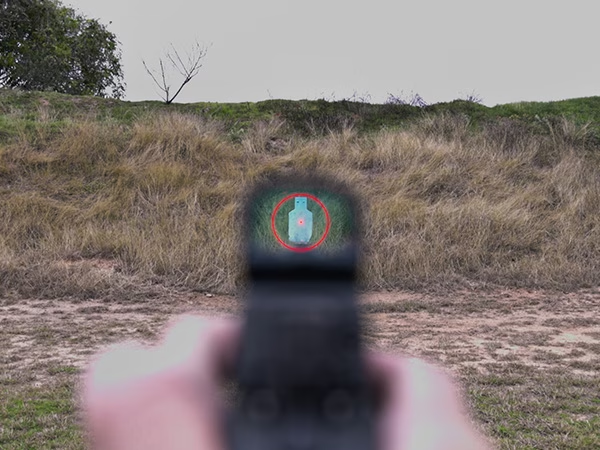
The phrase “astigmatism-friendly” should be understood as a personal-fit description, not a medical certification. Still, certain features are worth comparing because they give the eye different reference shapes to work with.
For example, some users prefer a circle around a central dot because the larger outer shape remains easy to interpret even if the center point blooms. Others prefer the least complicated single-dot presentation possible. A selectable multi-reticle optic can be useful during evaluation because the user can compare those layouts through the same glass and emitter system.
Reticle Settings Worth Testing
- Start at the lowest brightness that remains comfortably visible.
- Compare a single dot with a larger-reference or circle-dot pattern if available.
- Compare red and green only if the optic offers both; neither color is universally superior.
- Evaluate the reticle with your normal prescription glasses or contact lenses.
- Repeat the comparison in more than one lighting condition before deciding.

Recommended Sights for Astigmatic Shooters
Rather than naming one universal winner, Gunvexa recommends choosing a sight by the features your eye can actually resolve. This is especially important with astigmatism because two optics with similar specifications can look noticeably different to the same user.
Three Useful Categories to Test
Simple Dot Optics
- Minimal visual clutter
- Often available in several dot sizes
- Best when your eye sees one stable central shape
Multi-Reticle Optics
- Lets you compare dot and circle-dot layouts
- Useful when a larger reference shape looks cleaner
- Can reduce the need to change optics just to test reticle geometry
Gunvexa Recommendation
Test the Reticle, Not Just the Specification Sheet
If possible, look through the exact sight with your normal vision correction before buying. Start with moderate brightness, compare the available reticle modes and choose the presentation that looks most stable to your eye. A model that works well for another astigmatic user may not be the best one for you.

Programs and Discounts for Law-Enforcement and Military
Law-enforcement and military users often have additional procurement rules, approved-equipment lists and documentation requirements. Therefore, a good professional program should do more than advertise a discount; it should help the buyer confirm eligibility, compatibility, warranty coverage and agency requirements before an order is placed.
Gunveva Government can be presented as the professional purchasing channel for departments, agencies and eligible individual users. However, exact eligibility, pricing and approved configurations should be confirmed for each request rather than assumed from a general promotion.
What Professional Buyers Should Confirm
- Whether the optic appears on the agency's approved equipment list.
- Whether the exact mounting footprint and host platform are compatible.
- Whether the selected reticle and color are available in the approved model.
- Warranty, service and replacement procedures for duty-issued equipment.
- Eligibility documentation and any restrictions tied to professional pricing.
- Whether vision accommodations or prescription eyewear affect qualification policy.
Conclusion
Astigmatism can change the way a small illuminated reticle appears, but it does not produce the same result for everyone. For that reason, there is no single pistol red dot setting, color or reticle design that can be guaranteed to look best to every astigmatic eye.
Instead, start with accurate vision correction, use only as much brightness as the scene requires and compare reticle shapes directly. If a different color or larger reference pattern looks cleaner, that is useful personal information. If nothing looks consistently clear, an updated eye exam may be more valuable than replacing equipment repeatedly.
Ultimately, the best setup is the one you can see comfortably and consistently while following safe handling practices and any applicable range, agency or professional requirements.
Medical Sources & Further Reading
National Eye Institute — Astigmatism
National Eye Institute — Refractive Errors
Browse more Gunvexa guides and articles.
FAQs
Does astigmatism make every pistol red dot unusable?
No. Astigmatism varies considerably, and many people can still see a stable, usable reference shape. The result depends on the person's vision, prescription, reticle, brightness and viewing conditions.
Can lowering red-dot brightness help with astigmatism?
Sometimes. An unnecessarily bright reticle can appear to bloom or flare. Lowering brightness until the reticle is comfortably visible may improve perceived definition, although results vary.
Is a green dot always better for astigmatism?
No. Some users prefer green, while others prefer red or notice similar distortion with both. Color should be tested personally rather than treated as a guaranteed fix.
Is a larger reticle better for astigmatism?
It can be for some people. A larger dot or circle-dot pattern may provide a clearer reference if a tiny point stretches or blooms, but the best choice depends on the individual eye.
Can glasses or contact lenses improve how a red dot looks?
Corrective lenses can improve vision when the prescription properly addresses a refractive error. If your prescription is old or your vision has changed, an eye-care professional can determine whether an update is needed.
When should I get an eye exam?
If you have persistent blur, distortion, eye strain, headaches, trouble seeing at night or a recent change in vision, schedule an eye exam rather than relying on an optic to diagnose the cause.