
BUCKS
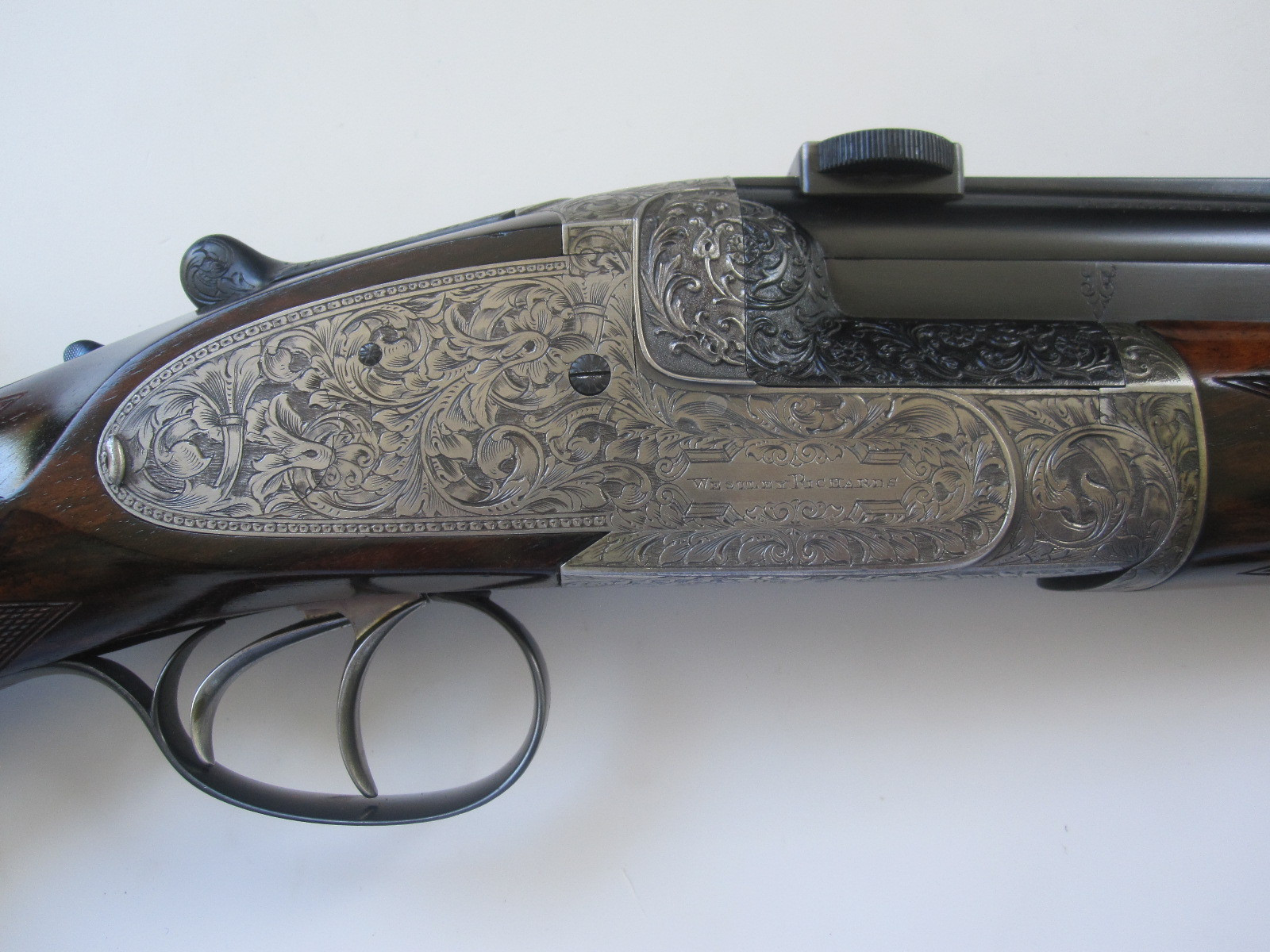
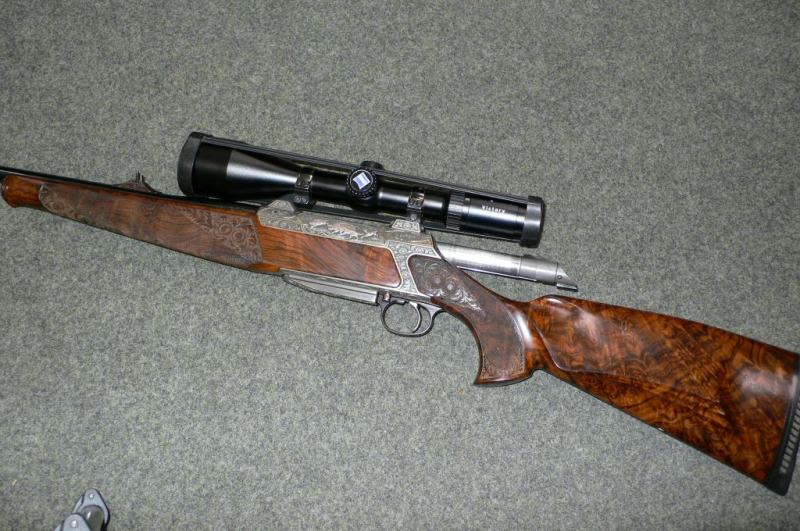
Westley Richards OVUNDO Kal. 9,3x74R
$25,814.8315% OFF Labor Day Event
Westley Richards Ovundo over-and-under double rifle chambered in 9.3x74R. This distinctive British design combines two vertically stacked rifle barrels with a traditional break-action layout and the unusual engineering that made the Ovundo one of Westley Richards’ most recognizable sporting arms.
Shipping
Today only: Save 10% automatically at checkout.
DETAILS
Westley Richards Ovundo 9.3x74R Double Rifle
The Westley Richards Ovundo takes the traditional double-rifle idea and arranges the two barrels one above the other rather than side by side. This example comes chambered in 9.3x74R, giving it a classic European rimmed rifle cartridge within a distinctly British over-and-under design.
Westley Richards developed the Ovundo during the early twentieth century. Leslie Taylor worked on the company’s over-and-under design before the First World War, and Westley Richards registered and patented important elements of the system around 1913 and 1914.
As a result, the Ovundo became much more than a normal over-and-under gun. Westley Richards produced it as shotguns, double rifles and specialized rifle-and-shot configurations.
At the same time, its traditional stock, compact break-action receiver and vertically stacked barrels give it an appearance that remains easy to recognize.
Westley Richards Ovundo Design
The Westley Richards Ovundo uses two barrels arranged vertically within an over-and-under barrel set.
Most British sporting guns of the period followed the side-by-side format. However, the Ovundo took a different approach and placed one barrel directly above the other.
Westley Richards developed its own way of making this arrangement work with the company’s established action designs. Historical information from the maker explains that Leslie Taylor wanted the Ovundo to incorporate features associated with Westley Richards’ boxlock and hand-detachable lock systems.
Therefore, the Ovundo does not simply copy the construction of a Boss or Woodward over-and-under.
Its action has its own shape, locking arrangement and mechanical character.
Two Over-and-Under Rifle Barrels
This particular Ovundo uses two rifle barrels rather than a shotgun configuration.
The layout includes:
- Upper rifle barrel
- Lower rifle barrel
- Over-and-under arrangement
- Break-action construction
- 9.3x74R chambering on this example
Westley Richards confirms that the company built Ovundos as double rifles as well as shotguns. Historical examples covered calibres from small rifle cartridges up through large sporting chamberings, with .318 Westley Richards becoming one of the better-known Ovundo rifle configurations.
As a result, an Ovundo double rifle belongs to a smaller and more unusual part of the wider Ovundo family.
The vertical barrel arrangement also distinguishes it immediately from the traditional side-by-side British double rifle.
9.3x74R Chambering
This rifle comes in 9.3x74R.
The 9.3x74R uses a rimmed case and has a long history in European break-action sporting rifles. Sources on the cartridge identify it specifically with double rifles, single-shot rifles and combination guns.
Therefore, the cartridge format fits naturally with the mechanical layout of an over-and-under double rifle.
The R in 9.3x74R refers to the rimmed case.
However, the chambering alone does not establish the rifle’s original factory specification.
Westley Richards’ historical material confirms that Ovundo double rifles appeared in many calibres, but the sources I found do not establish 9.3x74R as a standard original Ovundo chambering. One historical account even describes an Ovundo that was later rebored and rechambered to 9.3x74R.
For that reason, keep the product description simple:
Current chambering: 9.3x74R
If the Westley Richards ledger confirms that specification from new, then you can later change it to:
Original factory chambering: 9.3x74R
Original Chambering and Proof Marks
Older British sporting rifles often carry a long history within their barrels and proof marks.
With this Ovundo, the current 9.3x74R chambering should match the markings found on the barrels and proof flats.
More importantly, those markings can help determine whether the existing barrels remain in their original form or whether the rifle received later work.
Therefore, I would avoid statements such as:
“Originally built by Westley Richards in 9.3x74R”
unless documentation confirms it.
Instead, the natural wording is:
“This example is chambered in 9.3x74R.”
That keeps the page accurate without making assumptions about its earlier history.
Historical Ovundo Double Rifles
Westley Richards produced the Ovundo in a surprising number of configurations.
The company’s own historical archive records double-rifle versions ranging from relatively small calibres up to .425, while .318 Westley Richards became particularly associated with the rifle version.
In addition, several important customers ordered Ovundo double rifles during the 1920s.
Westley Richards records show that Indian princes took a particular interest in the model. The Maharaja of Alwar, for example, ordered several Ovundos, including rifles in .240, .318 and .350.
Therefore, the rifle version formed a genuine part of the Ovundo story rather than appearing as a rare experiment unrelated to the normal model.
Early Ovundo History
Leslie Taylor began working on the Westley Richards over-and-under concept before the First World War.
The company registered and patented major elements of the design around 1913–1914. Production then developed further after the war, with Ovundo manufacture restarting in 1919.
As a result, many of the better-known vintage Ovundos date from the 1920s.
That period also saw Westley Richards offer several grades and action configurations.
Meanwhile, the company used the same basic over-and-under idea for shotguns, rifles, Explora guns and Fauneta configurations.
This variety forms an important part of the model’s history.
Distinctive Ovundo Action
The Ovundo action differs visibly from many other British over-and-under designs.
Westley Richards used a relatively deep receiver because of the way the barrels hinge and because the company wanted to incorporate its established lockwork into the vertical-barrel format.
However, the deeper action also gave the Ovundo its recognizable profile.
Rather than trying to make the receiver look exactly like another maker’s over-and-under, Westley Richards developed a design around its own mechanical ideas.
For that reason, an Ovundo usually remains easy to identify even before reading the maker’s name.
Ovundo Locking System
Westley Richards developed a distinctive locking arrangement for the original Ovundo.
Historical company information describes the system as a “quadruple grip.” The design used hook-shaped bites at the breech end of the barrels that engaged with corresponding areas in the standing breech.
This arrangement formed part of Leslie Taylor’s 1914 patent work.
As a result, the locking system became one of the mechanical features that separated the Ovundo from other over-and-under guns of the same period.
For a WooCommerce description, however, there is no reason to turn this section into an operating guide.
The useful catalog wording is simply:
Historic Westley Richards Ovundo locking system
unless closer inspection confirms the exact action details on this rifle.
Fixed-Lock and Droplock Variations
Westley Richards produced the Ovundo with more than one action type.
Historical examples include:
- Fixed-lock actions
- Hand-detachable lock or Droplock actions
- Scroll-back receivers
- Sideplated versions
- Versions with inspection ports
- Single-trigger configurations
- Double-trigger configurations
Westley Richards’ archival research indicates that hand-detachable lock versions made up a large part of Ovundo production after the earliest examples.
However, I would not automatically call this particular 9.3x74R rifle a Droplock.
First check the actual action.
If the rifle has Westley Richards’ removable lock system, then add:
Westley Richards hand-detachable Droplock action
If it uses fixed locks, describe it accordingly.
That way, the page matches the actual rifle instead of copying specifications from another Ovundo.
Sideplates and Inspection Ports
Some higher-grade Ovundos used sideplates with small hinged inspection ports.
Westley Richards explains that these openings gave access to the trigger mechanism without requiring the complete action to come apart. The company patented this feature during the early Ovundo period.
In addition, these sideplates created a larger area for engraving.
However, not every Ovundo carried them.
Therefore, only mention:
Sideplates with inspection ports
if your rifle actually shows those small hinged panels.
If it has plain sideplates or a non-sideplated receiver, describe what the photographs show instead.
Single or Double Triggers
The Ovundo appeared with both single and double triggers.
Westley Richards offered its patented single-selective trigger as an option, while other examples used a conventional two-trigger arrangement.
Therefore, the trigger system provides another useful identifying detail for an individual rifle.
If your 9.3x74R has one trigger, use:
Westley Richards single-trigger configuration
If it has two, use:
Traditional double-trigger configuration
Do not add one or the other simply because another Ovundo used it.
Traditional Break-Action Layout
Despite the unusual mechanical details, the Ovundo still follows the familiar break-action principle.
The barrel set hinges away from the standing breech when the action opens.
At the same time, the vertical barrel arrangement gives the rifle a very different shape from a traditional side-by-side double.
The slim fore-end follows the stacked barrels closely. Meanwhile, the receiver carries the extra depth needed for the Ovundo’s action.
This balance gives the rifle much of its distinctive appearance.
Westley Richards Snap Lever
Many historical Ovundos carry the recognizable Westley Richards snap lever.
The maker’s own archival descriptions repeatedly identify this lever among the characteristic details found on Ovundo models.
The lever provides a clear visual link with other traditional Westley Richards sporting arms.
However, as with the locks and trigger system, the exact hardware on the individual rifle should guide the description.
If your rifle clearly has the Westley Richards snap lever, add it to the specifications and image ALT text.
Traditional Wood Stock
The Ovundo double rifle combines its tall action with traditional wood furniture.
Depending on the individual rifle, the stock may use a straight hand, pistol grip or another configuration.
Therefore, I would not assign a stock shape without seeing the actual firearm.
Useful descriptions based on visible details include:
- Figured walnut stock
- Pistol-grip stock
- Straight-hand stock
- Checkered grip
- Traditional fore-end
- Horn fore-end tip
- Leather-covered recoil pad
Only use the details that actually appear on this 9.3x74R rifle.
Meanwhile, avoid unsupported phrases such as “Grade 5 walnut” or “exhibition wood” unless the original paperwork identifies the stock that way.
Ovundo Engraving
The amount of engraving varied with the Ovundo grade.
Westley Richards offered relatively plain examples as well as highly decorated Highest Quality versions. Historical Highest Quality guns could carry extensive bold floral or scroll engraving across the action and sideplates.
As a result, two Ovundos can look very different even when the mechanical platform remains similar.
If this rifle shows extensive scroll engraving, describe it as:
Traditional Westley Richards scroll engraving
If it carries game scenes, identify only what you can clearly see.
For that reason, I would not automatically call this rifle a Highest Quality Ovundo unless its records or markings confirm the grade.
British Over-and-Under Double-Rifle Character
The Ovundo occupies an unusual position among British sporting rifles.
The majority of traditional British double rifles use side-by-side barrels. In contrast, Westley Richards placed the barrels vertically.
That layout gives the rifle a narrower front profile while creating a taller action.
Furthermore, Westley Richards adapted the system to handle rifle cartridges as well as shotgun gauges.
The result is not simply a shotgun action with rifle barrels attached. The company developed rifle versions as a genuine part of the Ovundo range.
9.3x74R and the Break-Action Format
The 9.3x74R uses the type of rimmed cartridge case traditionally associated with break-action rifles.
Historical and modern references describe the cartridge as particularly suitable for double rifles and single-shot sporting rifles.
Because of this, the chambering fits naturally with the physical format of an Ovundo double rifle.
Still, the most important information on a vintage rifle remains the barrel proof and regulation information.
Therefore, the listing should describe the caliber clearly without making claims about ammunition, pressure or performance that do not belong in a collector-focused catalog page.
Scope Mounting and Sights
Vintage Ovundo rifles appeared with different sight arrangements.
Depending on the individual example, a rifle may carry:
- Front blade sight
- Fixed rear sight
- Folding rear leaves
- Claw-mount bases
- Later scope mounts
However, these details vary greatly among surviving rifles.
If this 9.3x74R example has a scope or scope bases, describe exactly what appears on the firearm.
If later claw mounts or another system were added, identify them separately rather than describing them as original Westley Richards fittings without documentation.
Collectible Ovundo Variations
Part of the interest in the Ovundo comes from the number of different versions Westley Richards produced.
The company made shotguns in several gauges, double rifles across multiple calibres, Explora and Fauneta guns, fixed-lock models and Droplock models.
As a result, collectors cannot assume that every Ovundo follows one standard specification.
This particular example stands apart because it carries a 9.3x74R chambering.
Meanwhile, the exact action type, trigger arrangement, engraving and barrel history provide the details needed to identify where it fits within the wider Ovundo family.
Westley Richards Gunmaking History
Westley Richards has a long connection with Birmingham gunmaking and a history of developing its own sporting-gun mechanisms.
The Ovundo grew from that tradition rather than following a generic over-and-under pattern.
Leslie Taylor’s work combined the vertical-barrel idea with mechanical features associated with Westley Richards. Therefore, the Ovundo developed a clear identity of its own.
The model reached much of its early popularity during the 1920s, when customers in Britain, America and India ordered different Ovundo configurations.
More historical information appears in Westley Richards’ own Ovundo archive. Westley Richards Ovundo history
Additional sporting-arm catalog information is available through Gunvexa.
Key Features
- Genuine Westley Richards Ovundo
- Over-and-under double-rifle design
- 9.3x74R chambering on this example
- Two rifle barrels
- Vertically stacked barrel arrangement
- Break-action construction
- Traditional British double-rifle styling
- Historic Leslie Taylor Ovundo design
- Distinctive Westley Richards action
- Ovundo locking-system heritage
- British gunmaking origin
- Traditional wood furniture
- Rifle version of the Ovundo platform
- Rimmed rifle cartridge configuration
- Compact over-and-under barrel set
- Early twentieth-century design
- Multiple original Ovundo action variants
- Single or double trigger depending on this rifle’s configuration
- Fixed or hand-detachable locks depending on configuration
- Engraving dependent on individual grade
About the Westley Richards Ovundo Platform
Westley Richards developed the Ovundo as its own answer to the growing interest in over-and-under sporting guns during the early twentieth century.
Leslie Taylor began work on the design before the First World War and secured important patents around 1913–1914. Later, production resumed after the war and developed strongly during the 1920s.
As a result, the Ovundo appeared in far more forms than a simple over-and-under shotgun.
Westley Richards built examples as shotguns, double rifles, Exploras and Faunetas. The double-rifle versions appeared in a broad range of calibres, while action choices included fixed locks and the company’s well-known hand-detachable lock arrangement.
This example carries the European 9.3x74R rimmed cartridge. At the same time, its vertically stacked barrels retain the distinctive profile that defines the Ovundo platform.
Because surviving rifles can have complicated histories, the exact proof marks, barrel history, lock type and trigger configuration should guide the individual specifications.
The maker’s own historical article provides more detail about the development of the design. Read Westley Richards’ Ovundo history
Likewise, Gunvexa contains additional sporting-arm catalog information.
Finally, the Westley Richards Ovundo in 9.3x74R combines two over-and-under rifle barrels with one of Westley Richards’ most unusual historical action designs. The vertically stacked barrel set, British break-action construction and current 9.3x74R chambering give this example a clear identity without needing exaggerated wording.
SPECIFICATIONS
| Manufacturer | Westley Richards & Co. |
|---|---|
| Model | Ovundo Droplock |
| Type | Over-and-Under Double Rifle |
| Caliber | 9.3×74R (originally .350 High Velocity) |
| Year | 1923 |
| Action | Droplock Action with Ejectors |
| Sights | Peep Sight |
| Engraving | Highest-Grade Luxury Engraving |
| Condition | Historic Collector Grade / Matching Numbers |
⚠ WARNING: This product can expose you to chemicals, which are known to the State of California to cause Cancer and Reproductive Harm. For more information go to www.P65Warnings.ca.gov.
YOU MAY ALSO BE INTERESTED IN THESE PRODUCTS
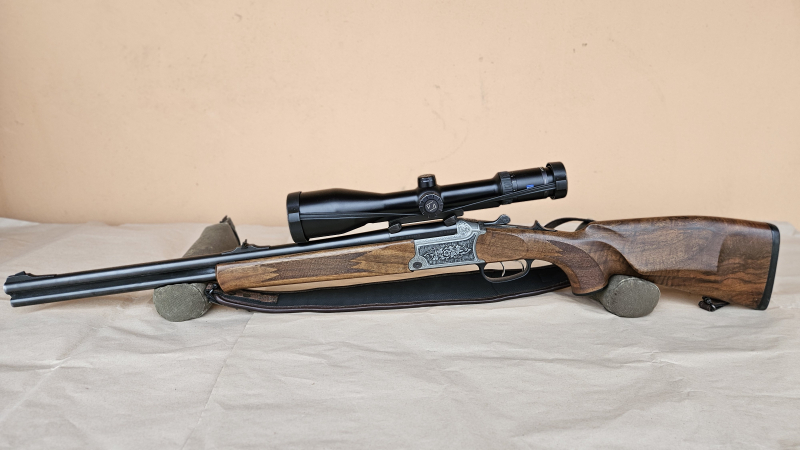
Bergstuzen Blaser Prestige B97 Kal.6,5X57R .30R Blaser

Blaser R8 .308 fluted hole stock HK11
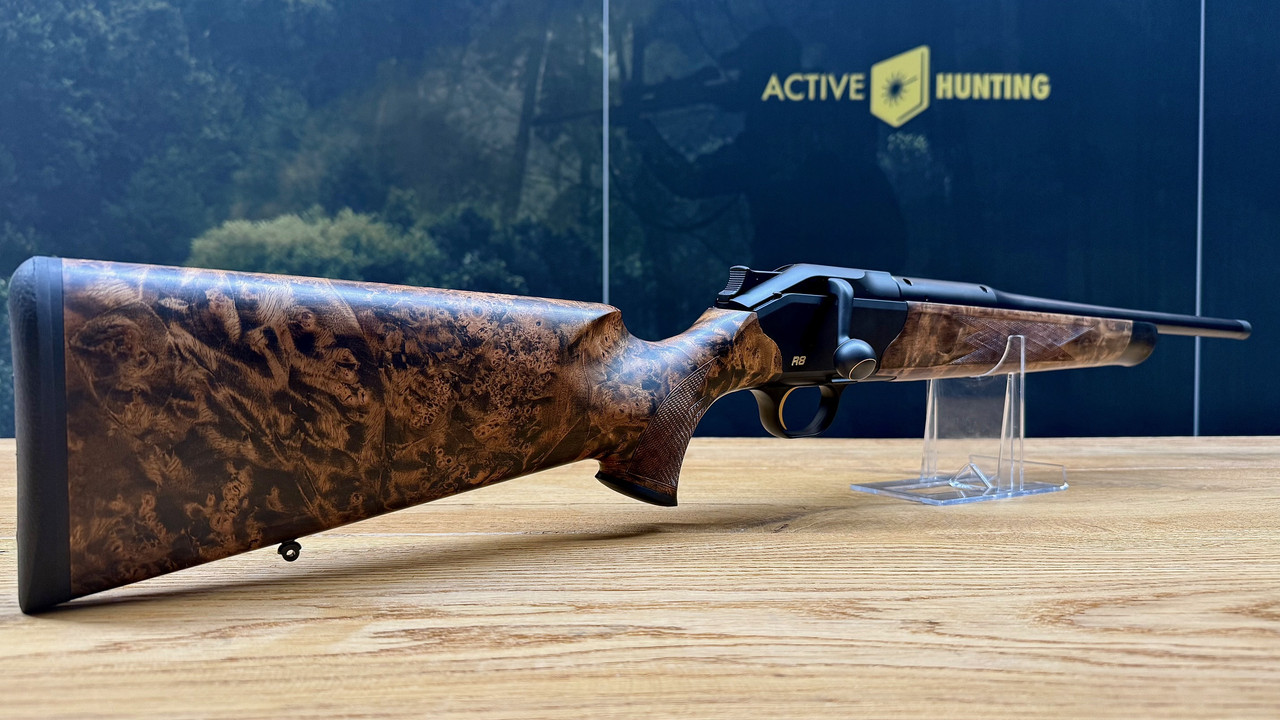
Blaser R8 Custom Stock Wood HK 9-10
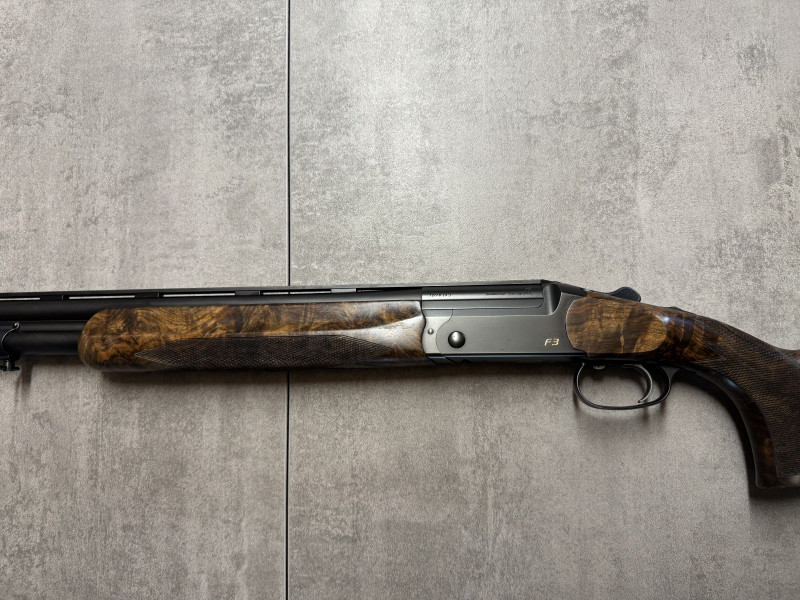
Blaser F3 Competition
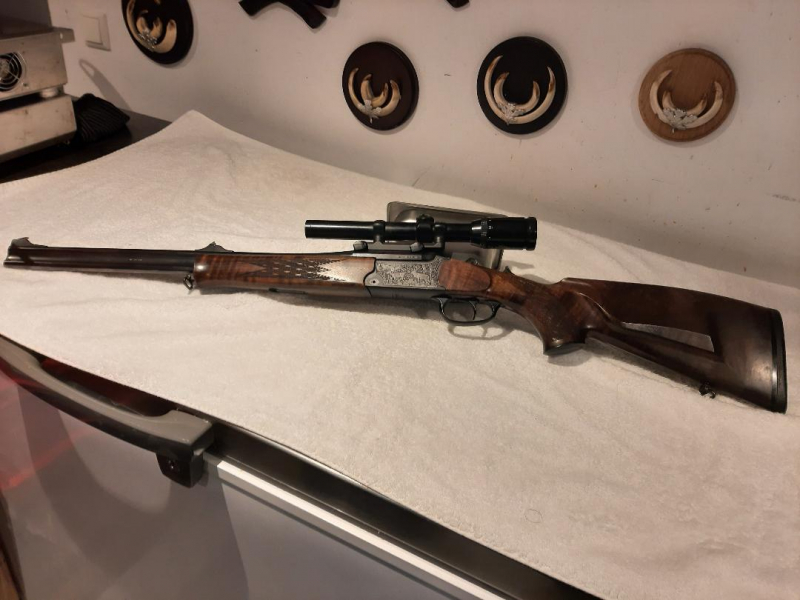
Blaser Over-and-under Double Rifle BB97Luxus Classic Single Trigger 30R Blaser
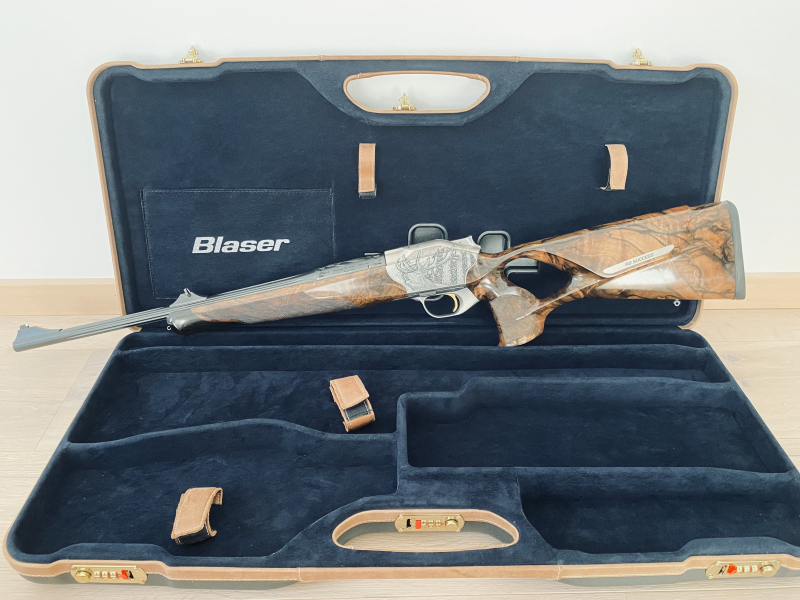
Blaser R8 Success Custom Grade II
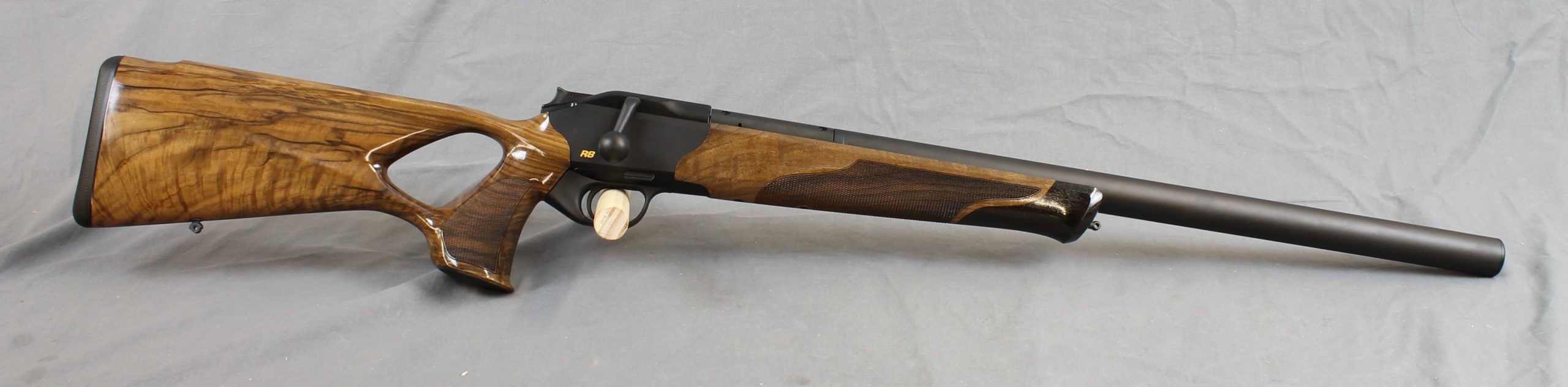
Blaser R8 Success Leather cocoa HK4
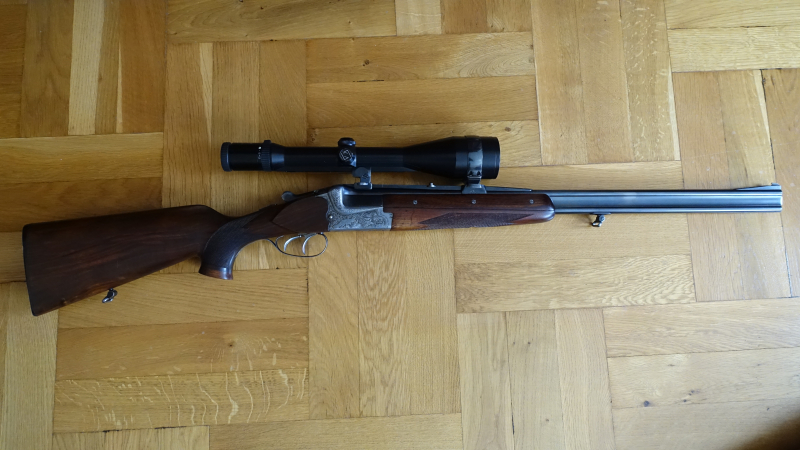
Merkel BDB 221E 8x57JRS Zeiss Diavari 3-12x56
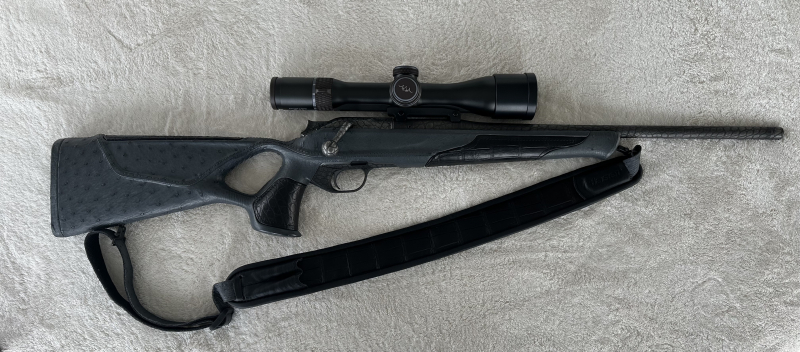
Blaser R8 Success THE SOUTHERN TRAPPER
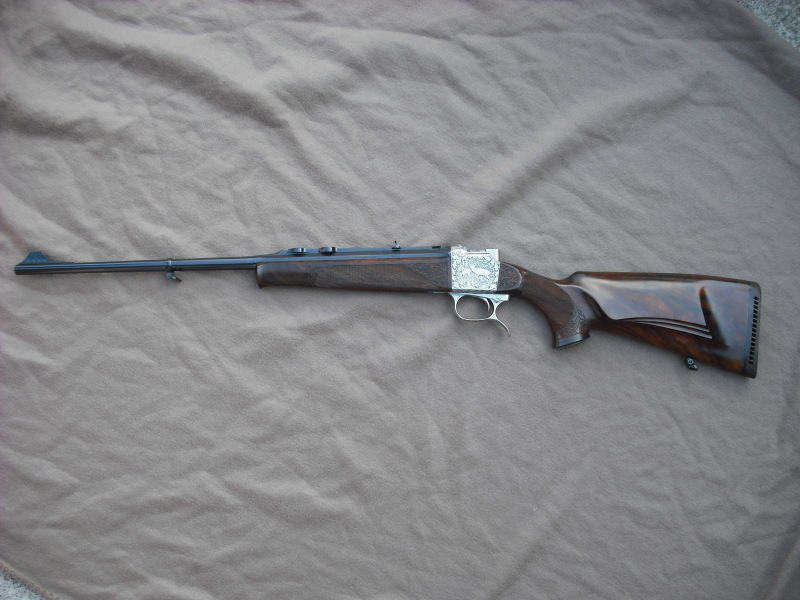
Blaser block rifle luxury version
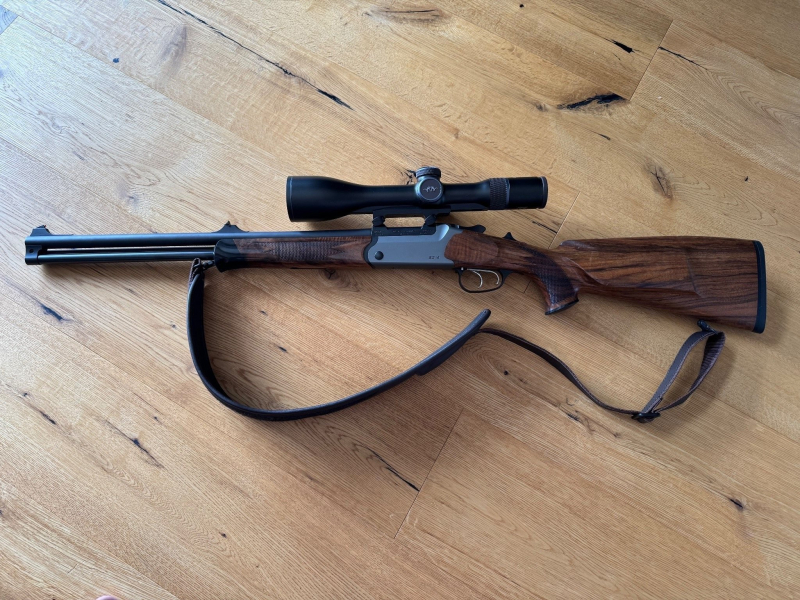
Blaser BD14 Overhead Drilling
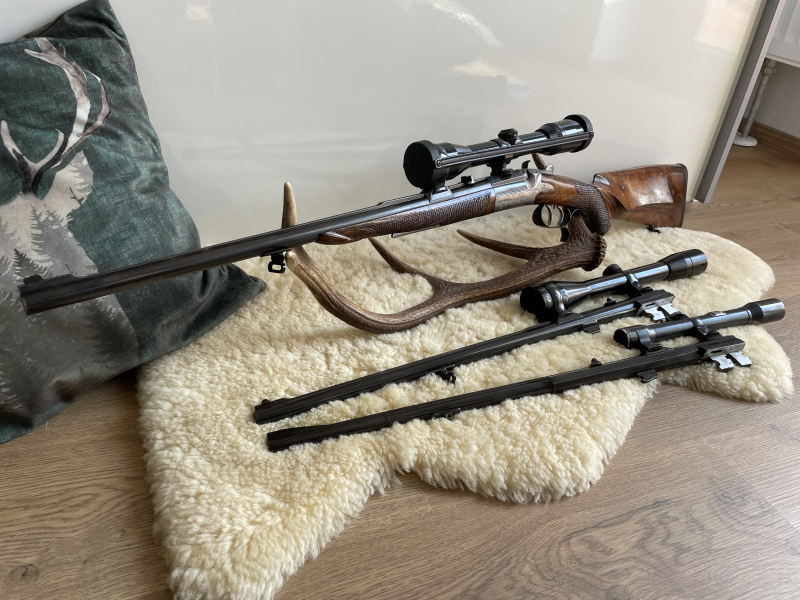
Ferlach single-shot nozzle, Ischl rifle
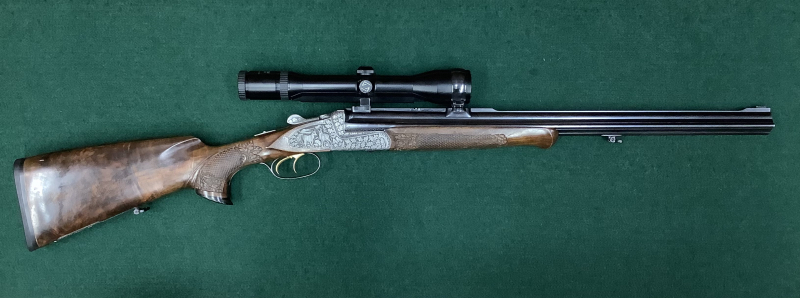
Bockdrilling Juch Cal. 1670
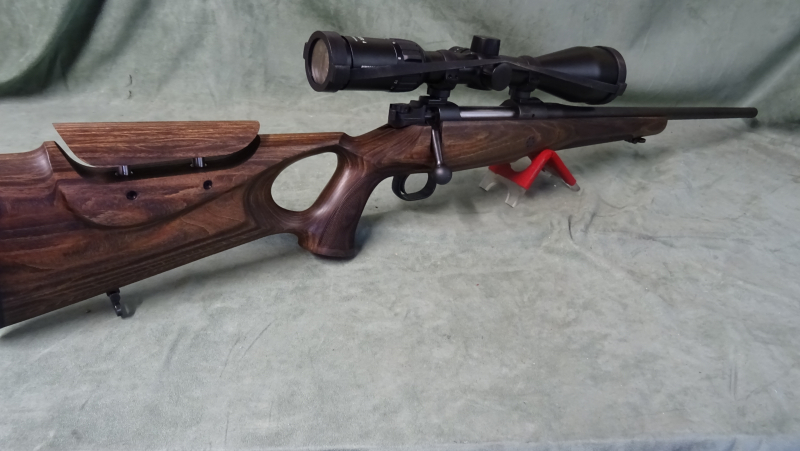
Mauser M12 Max, .30-06,Steiner Ranger4
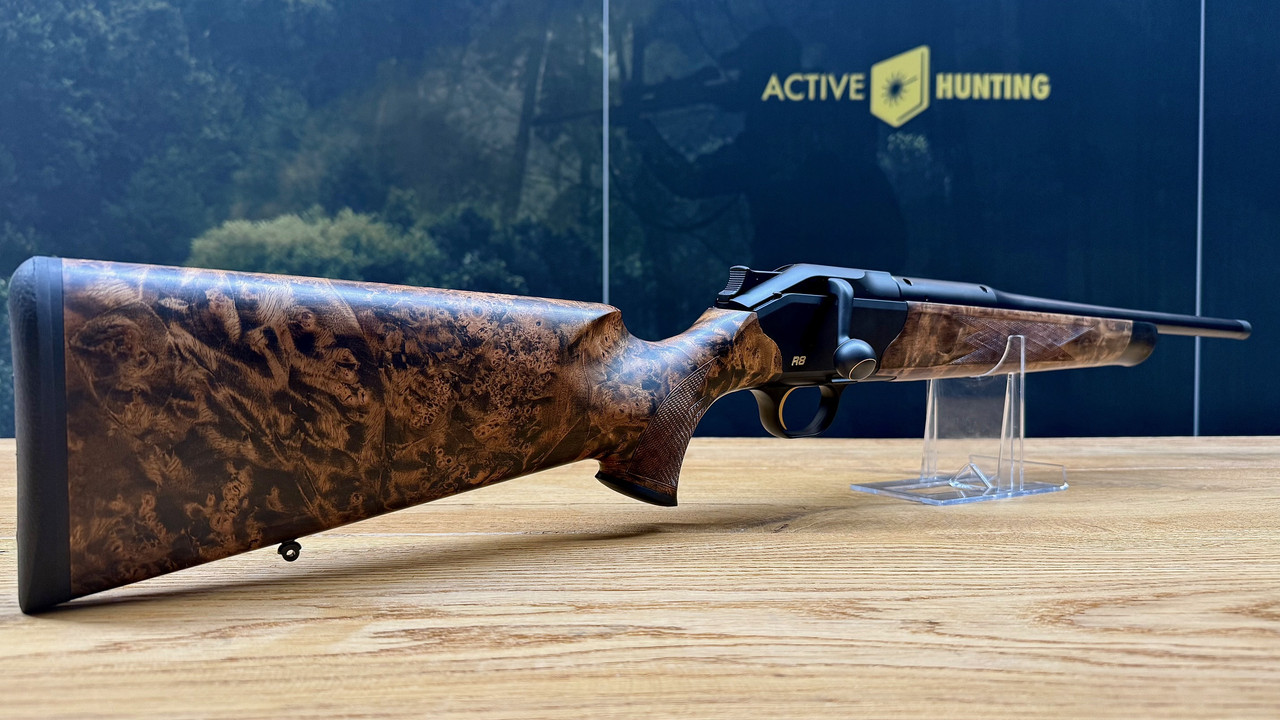
Blaser R8 Custom Stock Wood HK 9-10 BA
REVIEWS
There are no reviews yet. Be the first one to write one.