
Gear
TL;DR
The Walker’s Razor Slim remains a strong 2026 value for shooters who want low-profile electronic hearing protection with simple controls, useful ambient-sound amplification, and optional radio connectivity.
- NRR: 23 dB published Noise Reduction Rating.
- Electronic protection: microphones amplify quieter sounds while the headset reacts to sharp impulse noise.
- Audio input: a 3.5mm jack supports external audio and Walker’s compatible radio accessories.
- Best fit: range sessions, training, hunting, and group activities where hearing protection and communication both matter.
- Bottom line: excellent value for general-purpose ear pro, but proper fit and realistic expectations about NRR remain essential.

Walker’s Razor Slim Review 2026: Is This Ear Pro Worth It?
The Walker’s Razor Slim is one of the most recognizable electronic hearing-protection headsets in the shooting market. In this 2026 review, Gunvexa looks at its published 23 dB NRR, electronic sound management, low-profile earcups, 3.5mm audio input, and the optional Razor Walkie Talkie setup that can turn basic ear pro into a simple field-communications system.
Firearms can expose users to extremely high impulse noise, so hearing protection should be treated as essential equipment rather than an optional accessory. However, not every shooter wants a bulky headset. That is where the Razor Slim design becomes attractive: it aims to combine meaningful passive attenuation with a comparatively thin cup profile that is easier to wear around hats, glasses, and long-gun stocks.
In addition, electronic earmuffs offer an advantage that basic foam plugs cannot: they let the wearer hear speech and environmental sound more naturally while still providing passive attenuation through the earcups. Consequently, the Walker’s Razor Slim review is really about both protection and usability—not simply the headline NRR figure.
Gunvexa Research Note
This is a specification-based editorial review built around the product details and use cases shown in this guide. NRR is a laboratory rating, not a guarantee of real-world attenuation in every environment. Fit, seal, eyewear, hair, movement, and the noise source can all affect practical performance. Follow range rules and manufacturer guidance, and use additional hearing protection when appropriate.
Walker’s Razor Slim Electronic Muffs
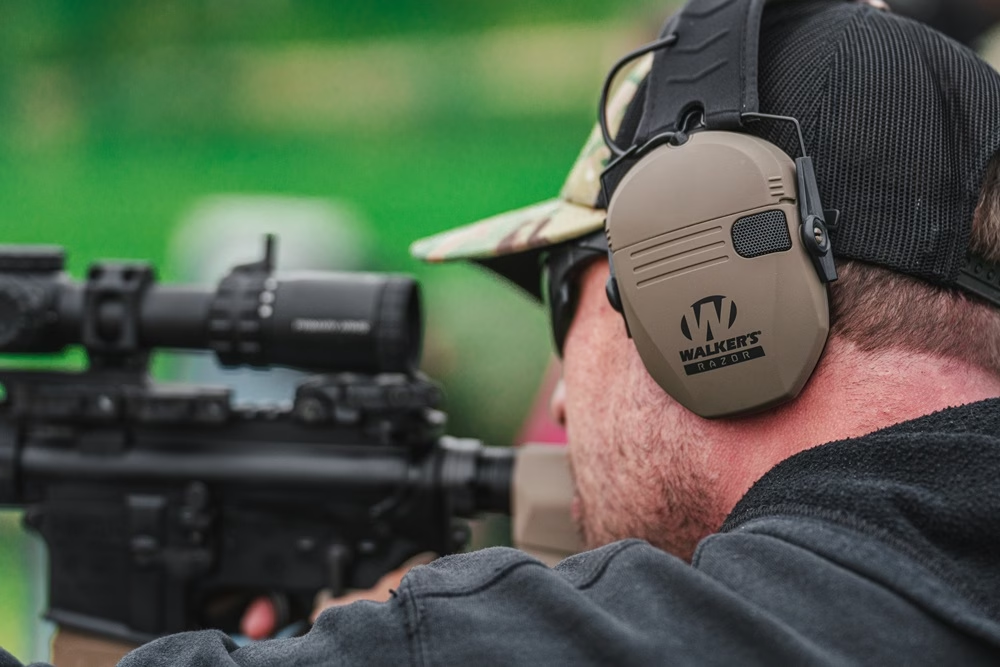
Walker’s Razor Slim muffs are built around a low-profile over-ear design and a published 23 dB Noise Reduction Rating. The headset uses external microphones and electronic processing so quieter sounds can remain audible while abrupt, high-level noise is managed by the electronic system. Meanwhile, the physical earcups continue to provide the passive attenuation that underpins the headset’s protection.
| Published NRR | 23 dB |
|---|---|
| Design | Low-profile electronic over-ear muffs |
| Electronic Function | Ambient sound amplification with impulse-noise management |
| Audio Connection | 3.5mm input |
| Power | AAA batteries on common Razor Slim configurations |
| Primary Use | Range use, training, hunting, and general hearing protection |
Why the Low-Profile Shape Matters
The slim cup profile is one of the biggest reasons the Walker’s Razor Slim became so popular. Traditional earmuffs can feel bulky when shouldering a rifle or wearing a brimmed cap. By reducing unnecessary cup depth, Walker’s makes the headset easier to integrate with common range and outdoor gear without making the product feel overly complicated.
Furthermore, the simple headband and familiar controls keep the learning curve low. That matters for buyers who want electronic ear pro but do not need a premium tactical headset with detachable downleads, advanced audio routing, or complex programming.
What the 23 dB NRR Really Means
A 23 dB NRR is useful for comparing hearing protectors under standardized test conditions, but it should not be interpreted as a promise that every gunshot will be reduced by exactly 23 dB at the ear. Real-world protection depends heavily on seal and fit. For example, thick eyewear arms can slightly open the cushion seal and reduce effective attenuation.
Therefore, users at especially loud indoor ranges, around larger-caliber firearms, or in environments that require additional protection may choose to combine properly fitted plugs with earmuffs. The electronic features remain convenient, but they do not replace the importance of a secure physical seal.

Razor Walkie Talkie: Field Comms Simplified
A major advantage of the Razor ecosystem is the ability to add a compatible Razor Walkie Talkie. Instead of replacing the earmuffs with a much more expensive communications headset, the radio accessory can connect to compatible Razor models and add group communication for range, training, and outdoor use.
This is especially useful because over-ear protection can make distant speech harder to understand once people spread out. The electronic microphones help with nearby conversation, yet a radio becomes more practical when a group is separated by berms, vehicles, vegetation, or distance.
3.5mm Audio and Communication Flexibility
The 3.5mm input gives the Walker’s Razor Slim extra flexibility beyond basic hearing protection. Depending on the exact setup, it can be used with compatible audio sources or Walker’s radio accessories. As a result, users can keep one lightweight headset for several activities instead of maintaining separate ear-pro and communications systems.
Compatibility should still be checked before buying. Walker’s has sold multiple Razor-branded products over time, and not every accessory works with every electronic muff. Consequently, the exact model name and connector arrangement matter more than the Razor branding alone.
Walker’s Razor Slim Use Cases
The most useful question is not whether electronic muffs are “tactical,” but whether their combination of hearing protection, ambient audio, and optional communication matches the way you actually shoot. In practice, the Razor Slim platform fits several common scenarios well.

Recreational Range Trips
For casual range use, electronic ear pro can make conversations much easier between strings of fire. Instead of repeatedly removing plugs or lifting one cup away from the ear, the wearer can leave the headset in place and use the volume control to hear normal speech more clearly.
Additionally, a Walker’s Razor Slim setup is straightforward enough for occasional shooters who do not want to manage a complicated communications system. The result is a practical middle ground between disposable plugs and premium professional headsets.

Hunting
Hunting is another setting where hearing protection and situational awareness can conflict. Hunters often need to hear voices, movement, and environmental cues before a shot, yet they also need meaningful protection when a firearm is discharged. Electronic muffs help bridge that gap by keeping quieter ambient sound audible while the headset remains on the ears.
A radio accessory can also help groups remain coordinated when people are spread across a property. However, local radio rules, channel etiquette, and hunt-specific communication requirements should always be followed.

Range Training
Communication becomes even more important during structured training. An instructor may need to give commands, correct positioning, or stop a drill quickly, while the shooter still needs continuous hearing protection. Electronic muffs simplify that interaction because voices can remain audible without removing the headset.
Meanwhile, compatible radio communication can extend that benefit when instructors and students are farther apart. For group classes, therefore, the Walker’s Razor Slim platform can provide a relatively affordable path to clearer communication without moving to high-end professional comms gear.
Is the Walker’s Razor Slim Setup Worth It?
For many buyers, yes. The main reason is value: the Walker’s Razor Slim combines a low-profile shape, 23 dB published NRR, electronic ambient-sound capability, and a useful accessory ecosystem without requiring the budget of a premium communications headset.
Nevertheless, the Razor Slim is not automatically the right solution for every environment. Shooters who regularly work around especially high noise levels may want a higher-attenuation solution, double hearing protection, or a more specialized headset. Likewise, users who need professional-grade communications integration may eventually outgrow the simple 3.5mm and add-on radio approach.
Pros
- Published 23 dB NRR
- Low-profile earcup design
- Electronic ambient-sound amplification
- 3.5mm audio input
- Optional Walker’s radio compatibility
- Strong value for general range use
Cons
- Fit and eyewear can affect real-world attenuation
- 23 dB NRR may not be enough for every high-noise environment
- Accessory compatibility varies by exact Razor model
- Not a substitute for professional comms gear when advanced integration is required
- Battery-dependent electronic features
Gunvexa Verdict
Who Should Buy the Walker’s Razor Slim in 2026?
Buy it if you want affordable electronic ear protection that is slimmer than traditional earmuffs, easy to operate, and flexible enough for range sessions, hunting, or training. Skip it only if your environment demands substantially more attenuation or if you already know you need a full professional communications headset.

Conclusion
Good hearing protection is one of the most important pieces of range equipment, and the Walker’s Razor Slim succeeds because it keeps the concept simple. It gives users passive attenuation, electronic ambient audio, a slim physical profile, and optional connectivity without turning a basic headset into an overly complicated system.
In 2026, the strongest reason to choose the Razor Slim is still its balance of price, comfort, and everyday functionality. For recreational shooters, hunters, and instructors who want a recognizable electronic muff platform, it remains an easy product to shortlist.
Finally, remember that the published 23 dB NRR is only one part of the decision. A secure fit, unbroken ear-cushion seal, appropriate use of plugs when needed, and compliance with range or workplace hearing-protection requirements all matter just as much as the product name on the side of the cup.
Manufacturer Sources & Further Reading
Walker’s Game Ear — Official Website
Browse more Gunvexa Walker’s Razor Slim articles.
See more Gunvexa firearm-accessory and hearing-protection guides.
Frequently Asked Questions (FAQ)
Does the Walker’s Razor Walkie Talkie work with all Walker’s earmuffs?
No. Compatibility depends on the exact Razor model and connector arrangement. Check the specific Walker’s product listing before buying a radio accessory for your headset.
Can I use VOX and push-to-talk with a Razor Walkie Talkie?
Feature support can vary by the specific radio version. Check the current Walker’s manual or product listing for the exact transmit modes supported by the unit you are considering.
How far can a Walker’s Razor Walkie Talkie transmit?
Real-world range varies with terrain, obstructions, interference, radio settings, and local conditions. Manufacturer range claims should be treated as best-case figures rather than guaranteed field performance.
Do the Walker’s Razor Slim muffs still protect hearing while the radio is active?
The passive attenuation of the earcups does not disappear when the radio or electronic audio system is being used. However, overall protection still depends on a proper physical seal and correct fit.
What batteries do Walker’s Razor Slim muffs use?
Common Razor Slim Electronic configurations use AAA batteries. Because Walker’s has produced several versions, confirm the battery requirement on the exact model you own or plan to purchase.